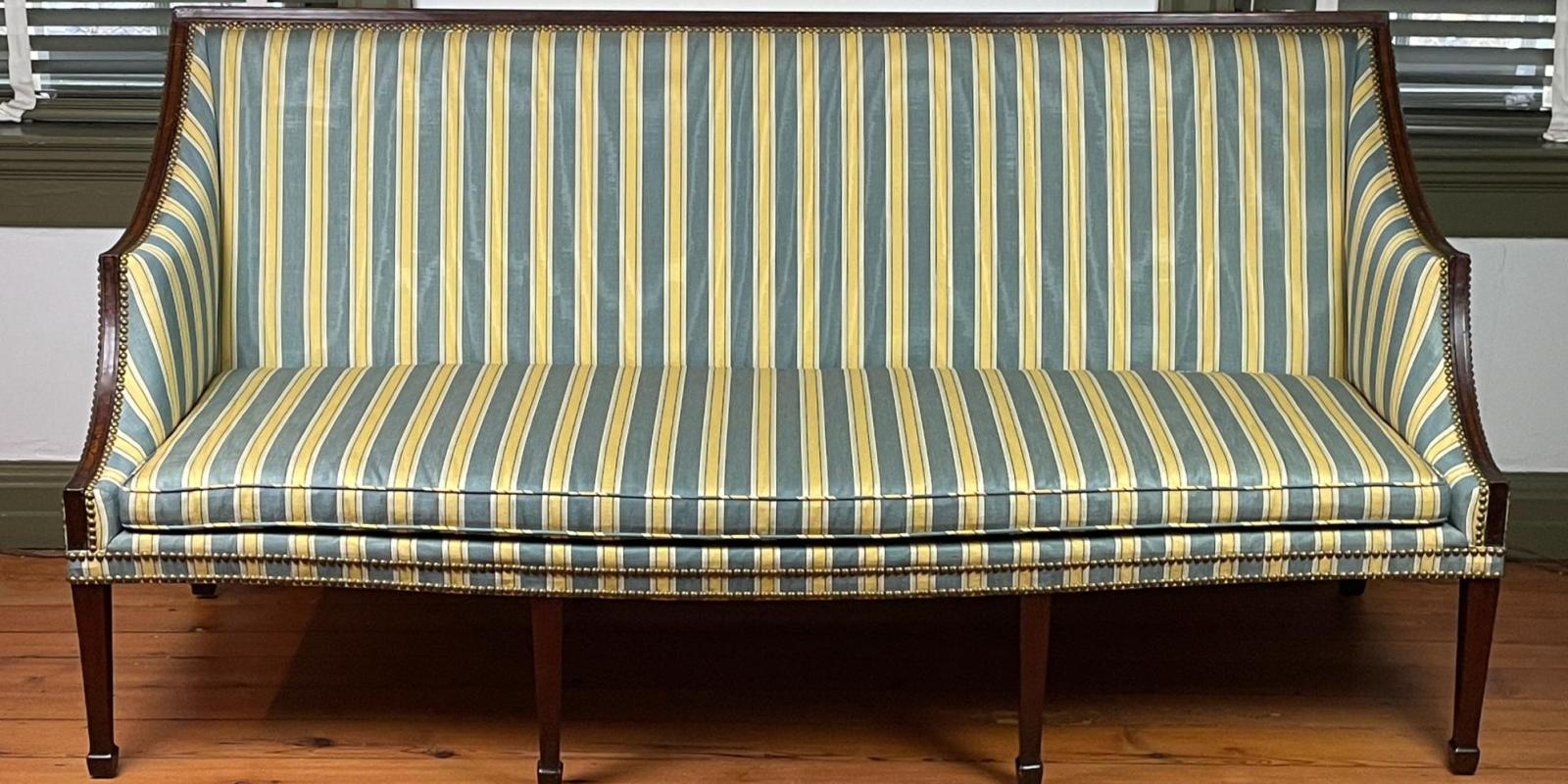
Fig. 1. Philadelphia-made sofa, 1790-1805.
About a year ago, the Historic Odessa Foundation was able to acquire a fine federal sofa made in Philadelphia between about 1790 and 1805 (fig. 1). The serpentine-front sofa stands on square-tapered legs that end in spade feet, an earlier design than lathe-turned legs. The back and arms are elegantly outlined in mahogany. Now installed in the Wilson parlor, it replaces an English example that had been on long-term loan from the Biggs Museum. A year is a long time to wait, but there is a back story.
When acquired, the sofa was upholstered in a maroon velvet. That material was inappropriate for exhibit in the house because of its color and its textile type. Step one was to remove it—carefully. Exposure of the wooden sofa frame would reveal its condition and any repairs. More important, it might expose evidence of how the sofa was upholstered originally, as determined by nail- and tack-holes and any surviving textiles or fragments. The sofa back, which gets relatively light usage and wear compared to the seat, retained its original webbing straps and linen. No other fragments of the show fabric, linen, webbing, or upholstery stuffing were found, but other questions were answered. Square-shank nail holes and faint impressions from brass heads in rows near the top and bottom of the front rail confirmed the use, pattern, and spacing of original brass tacks (fig. 2).
As for the frame itself, it was found to be in good condition. One of the rear legs had split and had been reattached about a quarter-inch off its original position. It was removed, stabilized, and returned to the correct location. Other small areas of damage, notably on some of the exposed mahogany strips outlining the frame, were repaired and colored to match their surroundings.
The modern upholstery fabric selected for the sofa is a federal-style appropriate blue and yellow stripe with a faint moiré or harateen finish—the shimmering or “watered” appearance visible in the darker areas. The quickest and easiest reupholstery treatment involves nailing all of the various layers in place. From a museum perspective, that produces two undesirable ends. First, the interior components of the sofa are locked up from view until the next reupholstery campaign—which will likely not occur for decades, perhaps many decades, and is expensive. Second, every nail driven into the wooden frame does a little bit of damage, and accumulated nail-holes, especially along natural tack lines, impact the structural integrity of frames and may require intrusive repairs.
Historic Odessa pursued a better path. The upholstery on the sofa is “minimally intrusive,” causing as little damage as reasonably possible. It also removable, although not readily, and it requires some effort to reinstall. To minimize impact on the frame, the modern brass tacks have had their shanks removed, and the tack heads are glued in place onto the fabric. That fabric wraps around ethafoam, an expanded polyethylene that can be carved to mimic the shape of conventional stuffing (fig. 3). Ethafoam sheets lie in front of the original linen and webbing that remains in the back; they attach to thin plywood sheets fitted onto and into the frame. Pieces of thin plastic sheeting in strategic locations ensures that the show fabric looks smooth and correct everywhere. The seat cushion is made of an inert material not attractive to insects or susceptible to other long-term damage. No show fabric covers the outside back (known among upholsterers as the “out back”) of the sofa since it faces a wall and away from visitors (fig. 4).
This sofa is here to stay.
Gallery
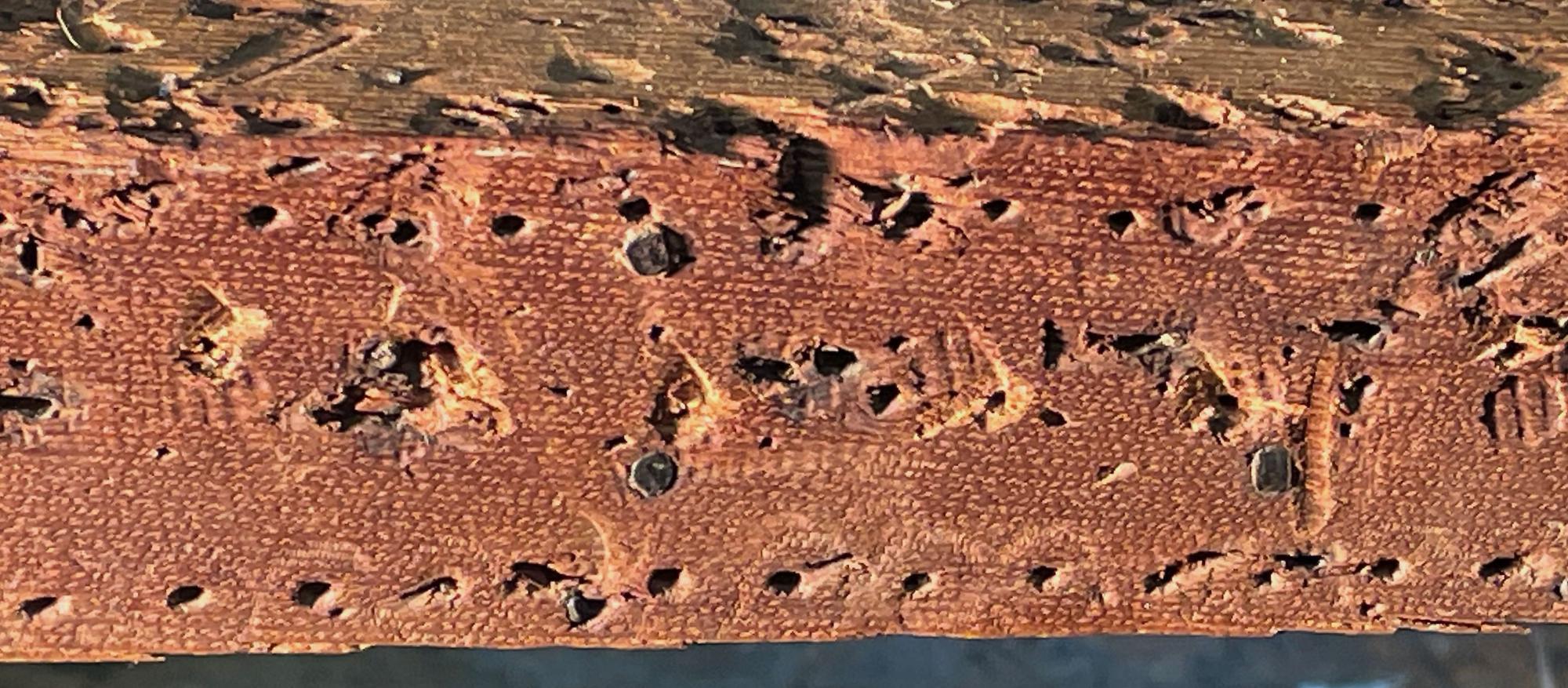
Fig. 2. Tack-hole evidence from the front rail.
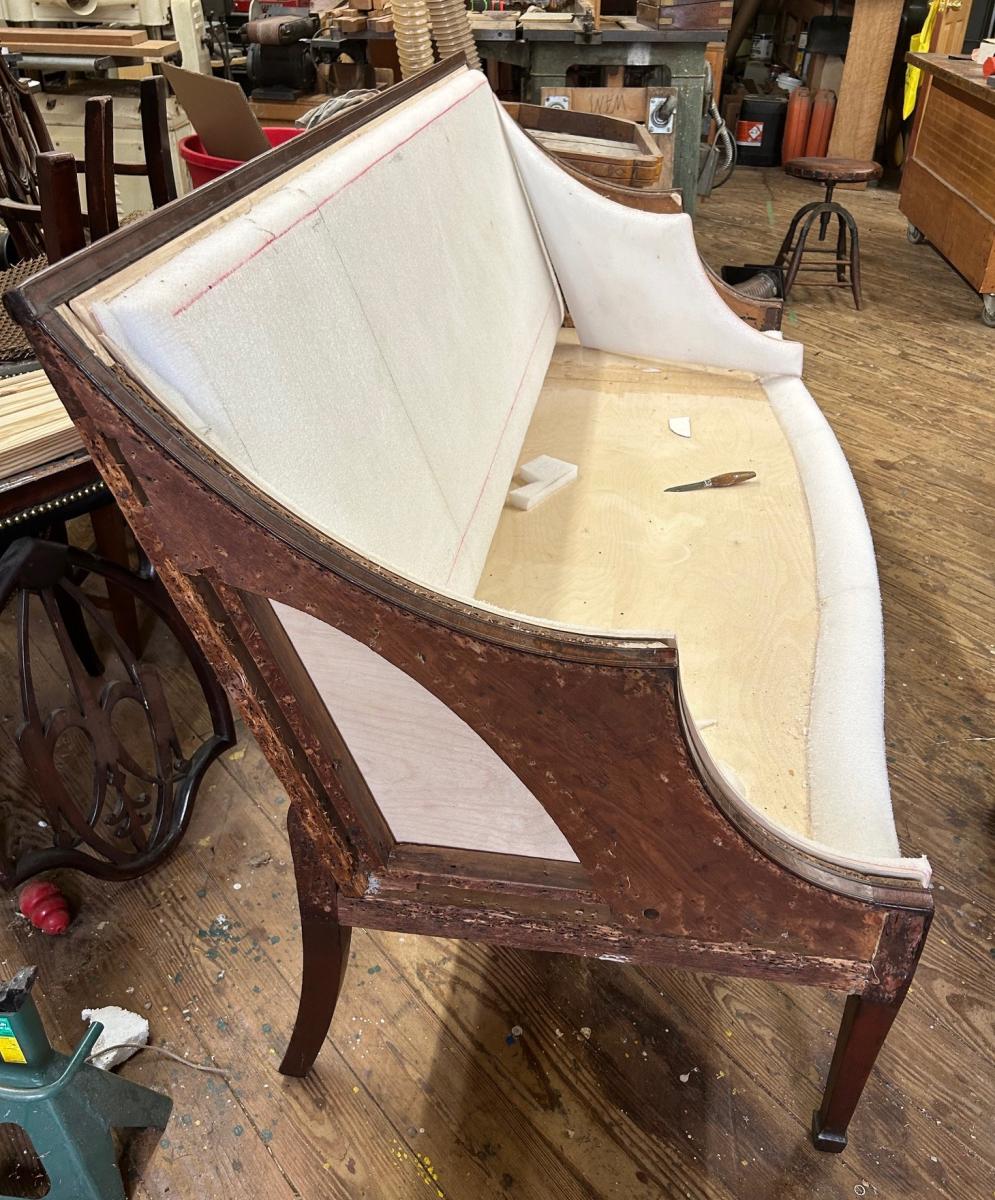
Fig. 3. Sofa reupholstery in progress.
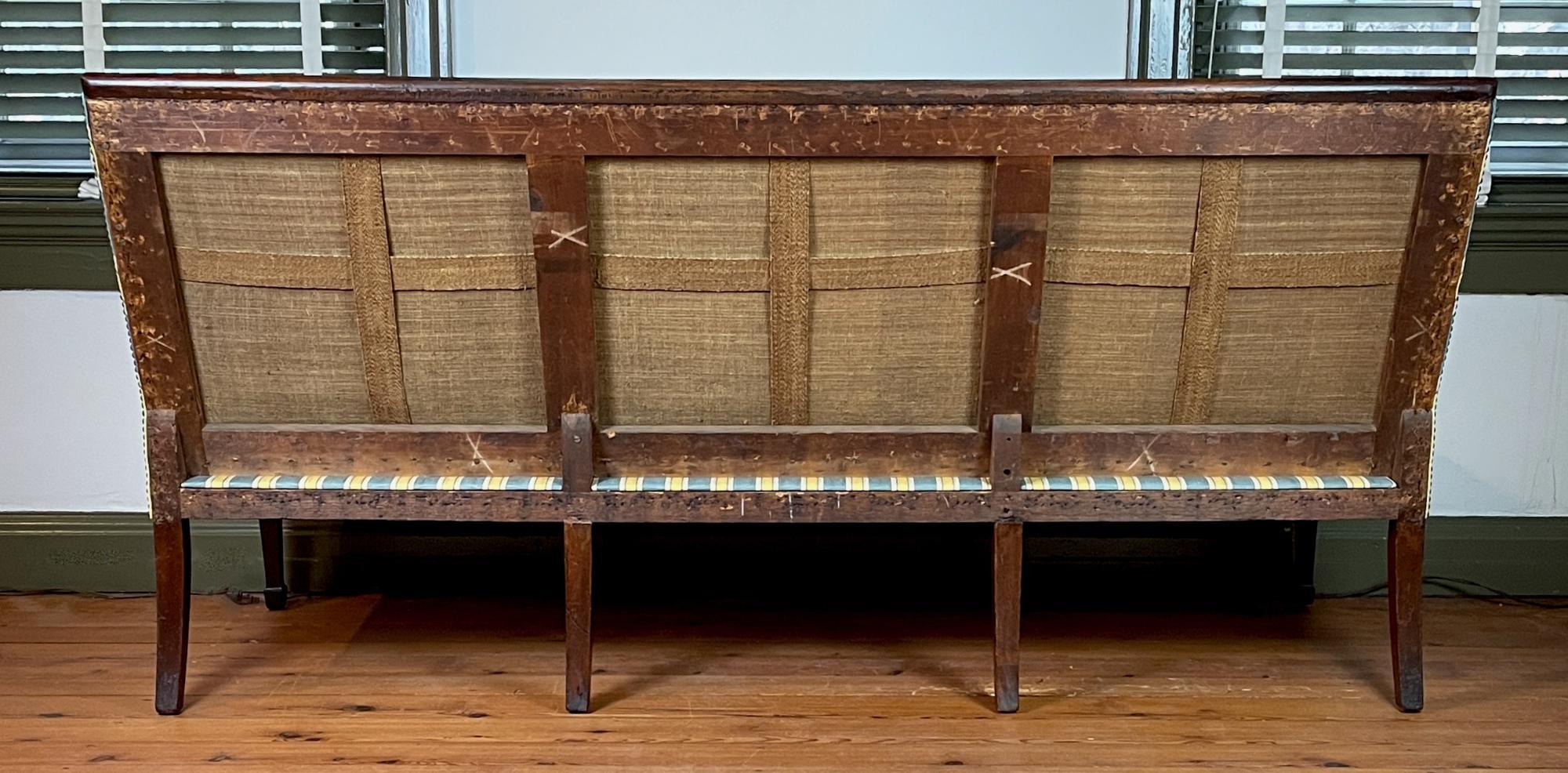
Fig. 4. The sofa back showing original under-upholstery.