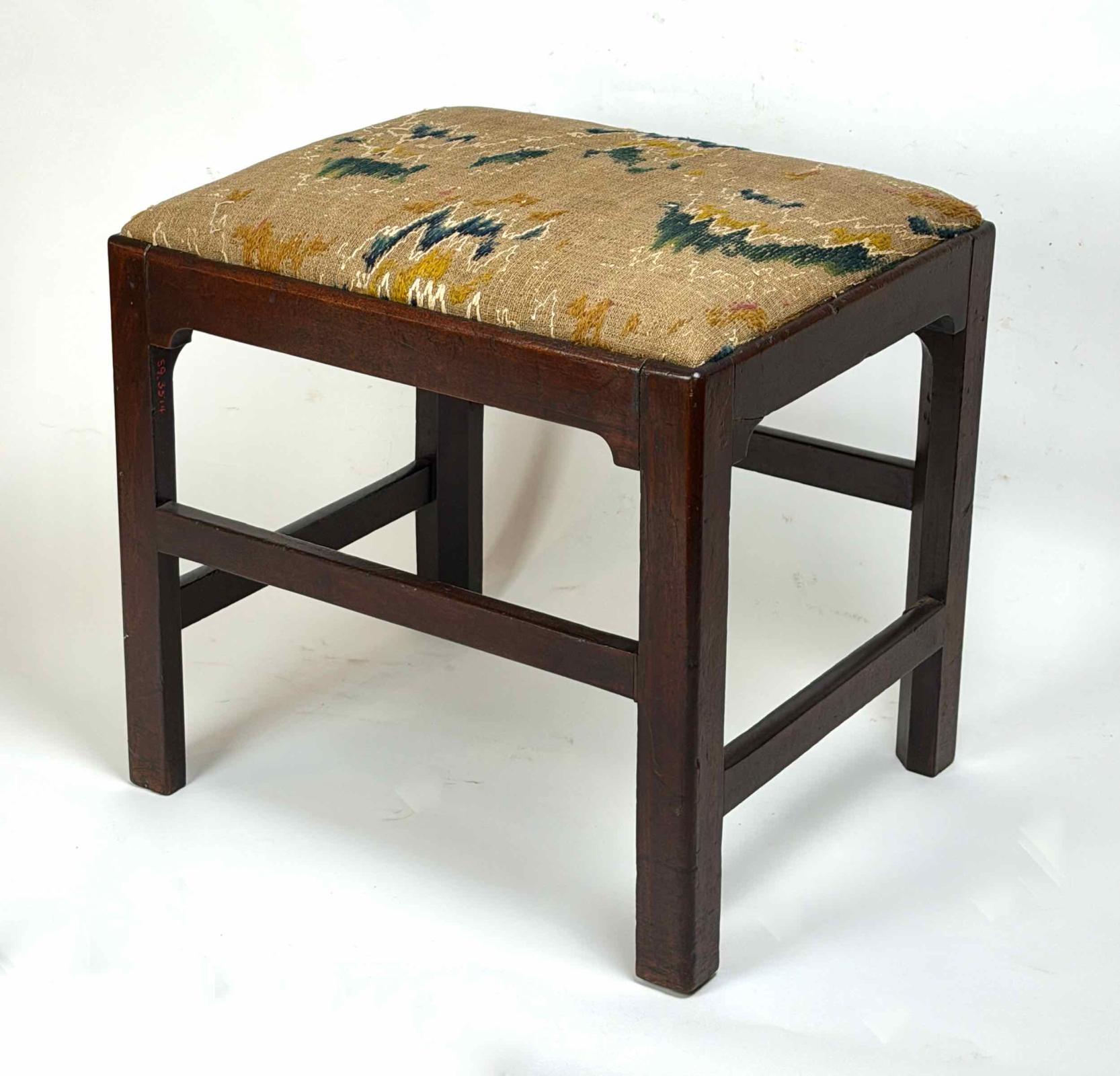
Stool
England
1750-1790
Measurements
18-1/2 in x 20 in x 16-1/2 in
Materials
Mahogany; beech slip seat
Credit Line
Historic Odessa Foundation, gift of H. Rodney Sharp
Accession Number
1959.3514
Inscription
“II” is chiseled into the top of one long seat rail.
Condition Notes
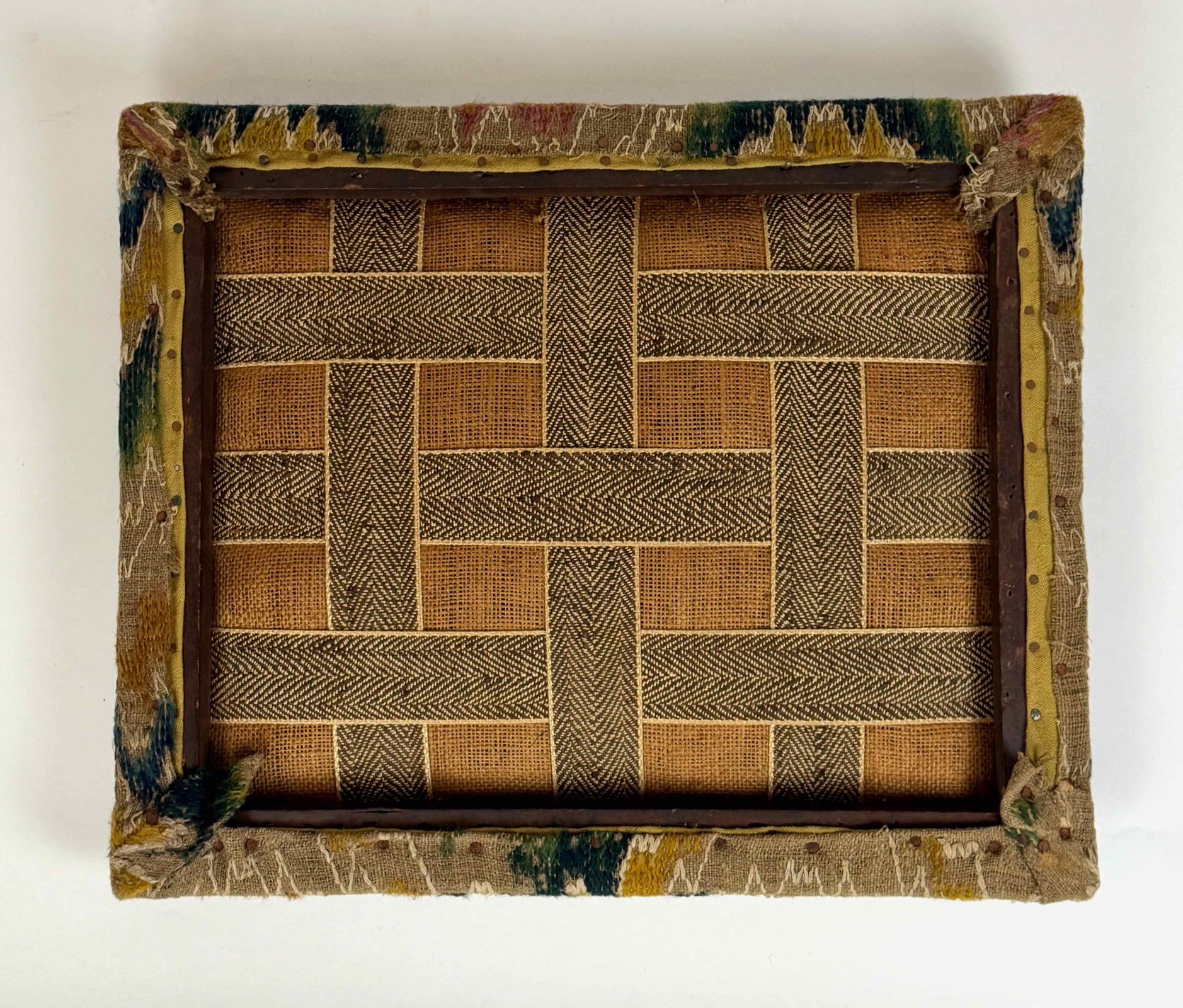
A split at the end of one short stretcher has been repaired. The slip seat has been reupholstered with a piece of 18th century needlework.
Provenance
Ex coll. H. Rodney Sharp
Comments
This simple, rectangular stool stands on four Marlborough legs with chamfers on the inside edge. Such chamfers reduce the thickness of the leg when it is viewed from an angle. Similar visual reduction occurs as the lightening or undercutting of the seat rails—another widespread, almost ubiquitous practice. The legs are joined by stretchers arranged in a box, in contrast to an H configuration, which was probably more common.
The slip seat sits within a ledge, or rabbet, cut into the top. The slip seat is upholstered with an 18th-century piece of flame-stitch needlework, being wool on canvas. The upholstery technique uses narrow linen strips in the 18th century fashion (although perhaps a few more strips than usual). The type of canvas above the strips is characteristic of the late 19th and 20th centuries.
The Roman numeral 2 chiseled into a rail indicates that this stool was originally made as one of a pair or perhaps four or more.