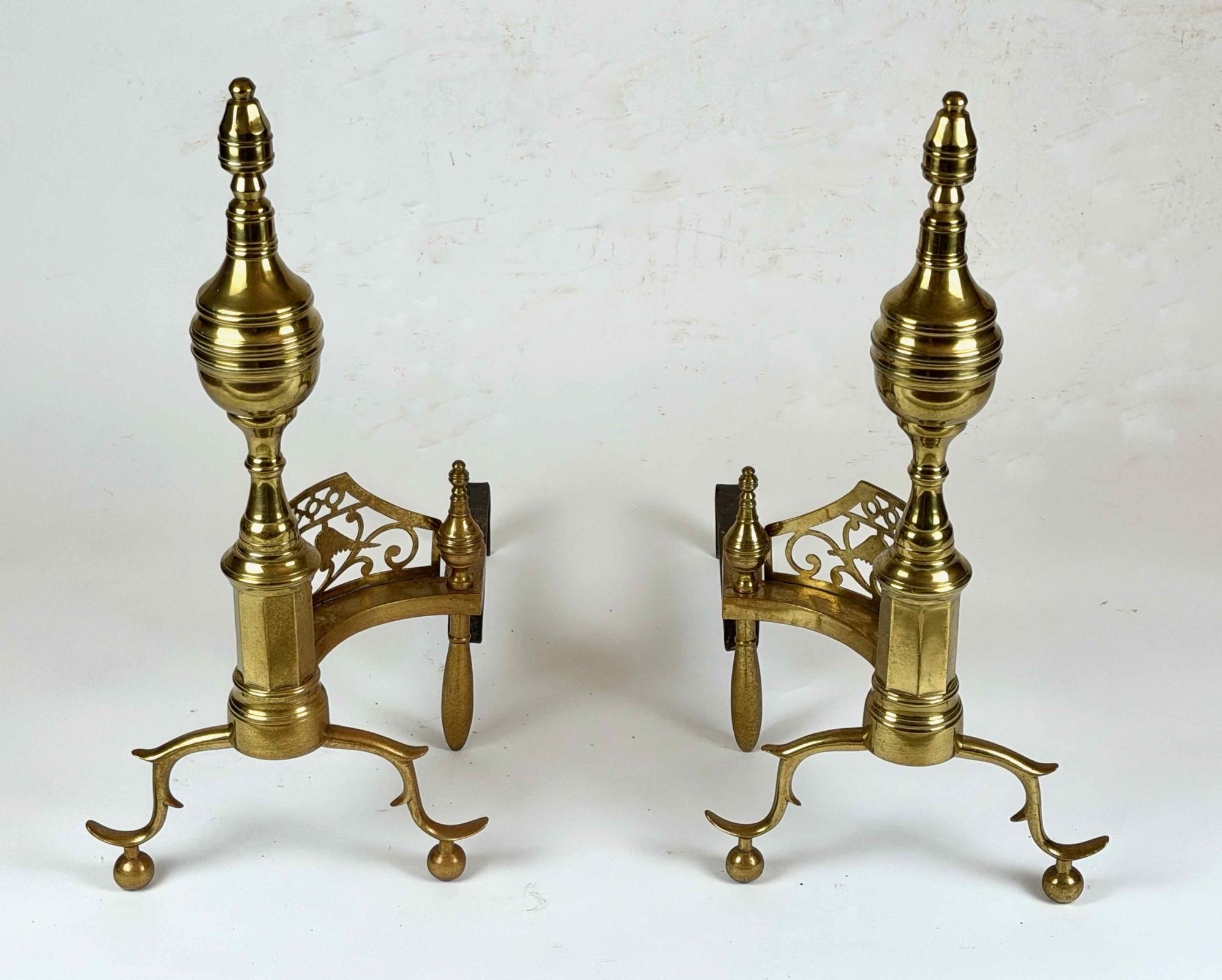
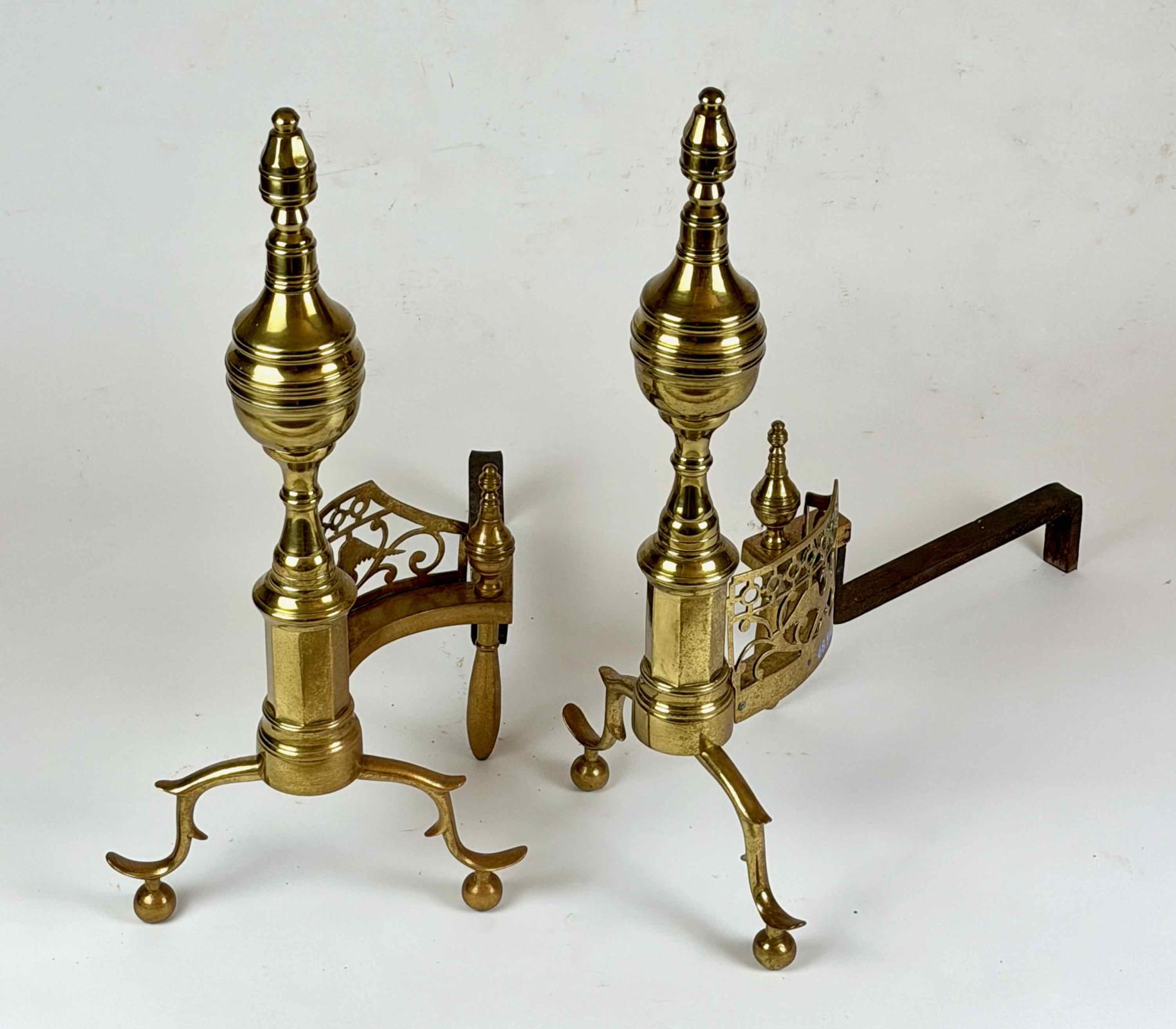
Pair of andirons
England or United States
1815-1830
or 1900-1940
Measurements
23 in x 10-7/8 in x 21 in
Materials
Brass and iron
Credit Line
Historic Odessa Foundation, bequest of H. Rodney Sharp
Accession Number
1968.810
Provenance
Ex coll. H. Rodney Sharp
Comments
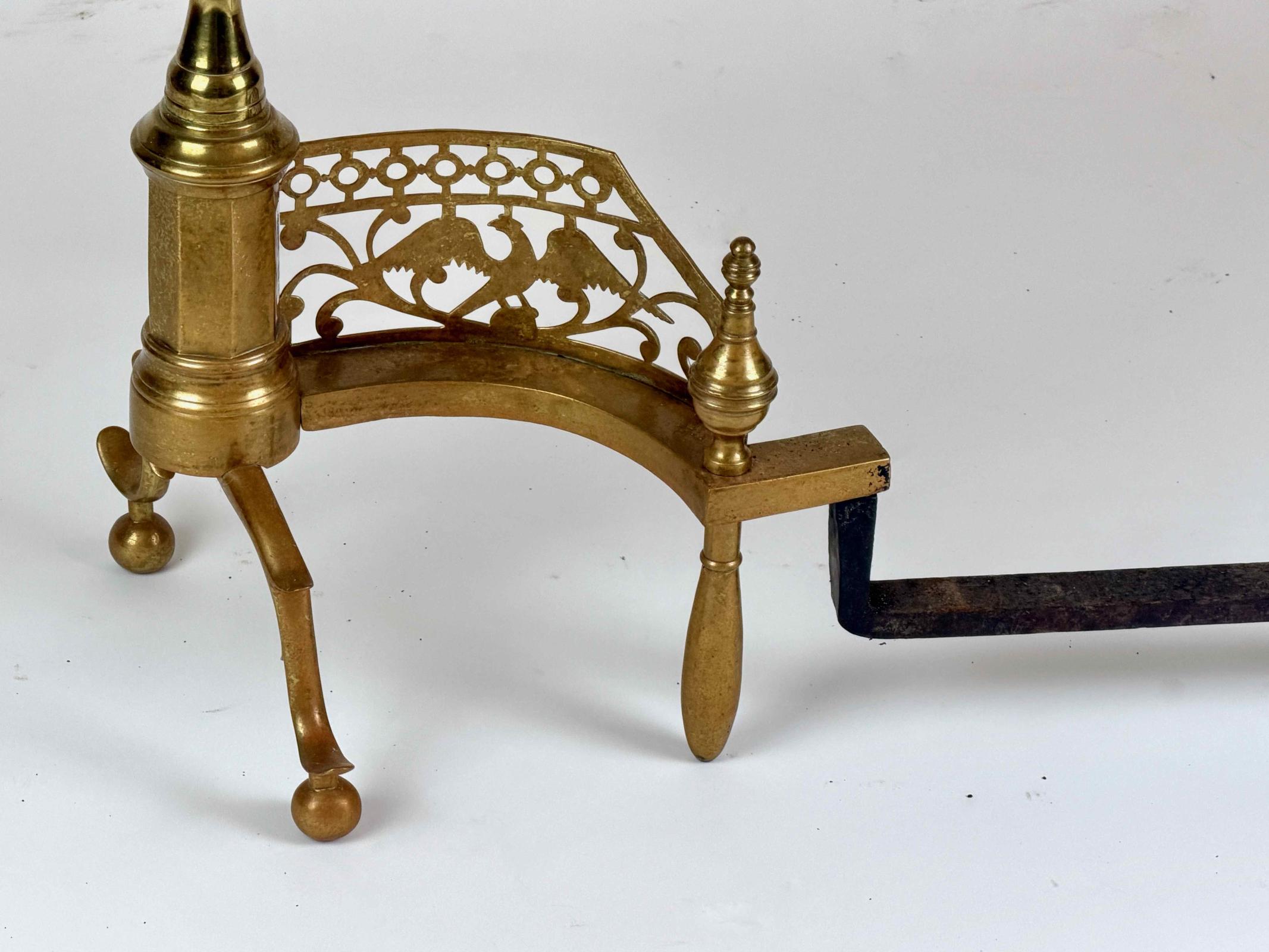
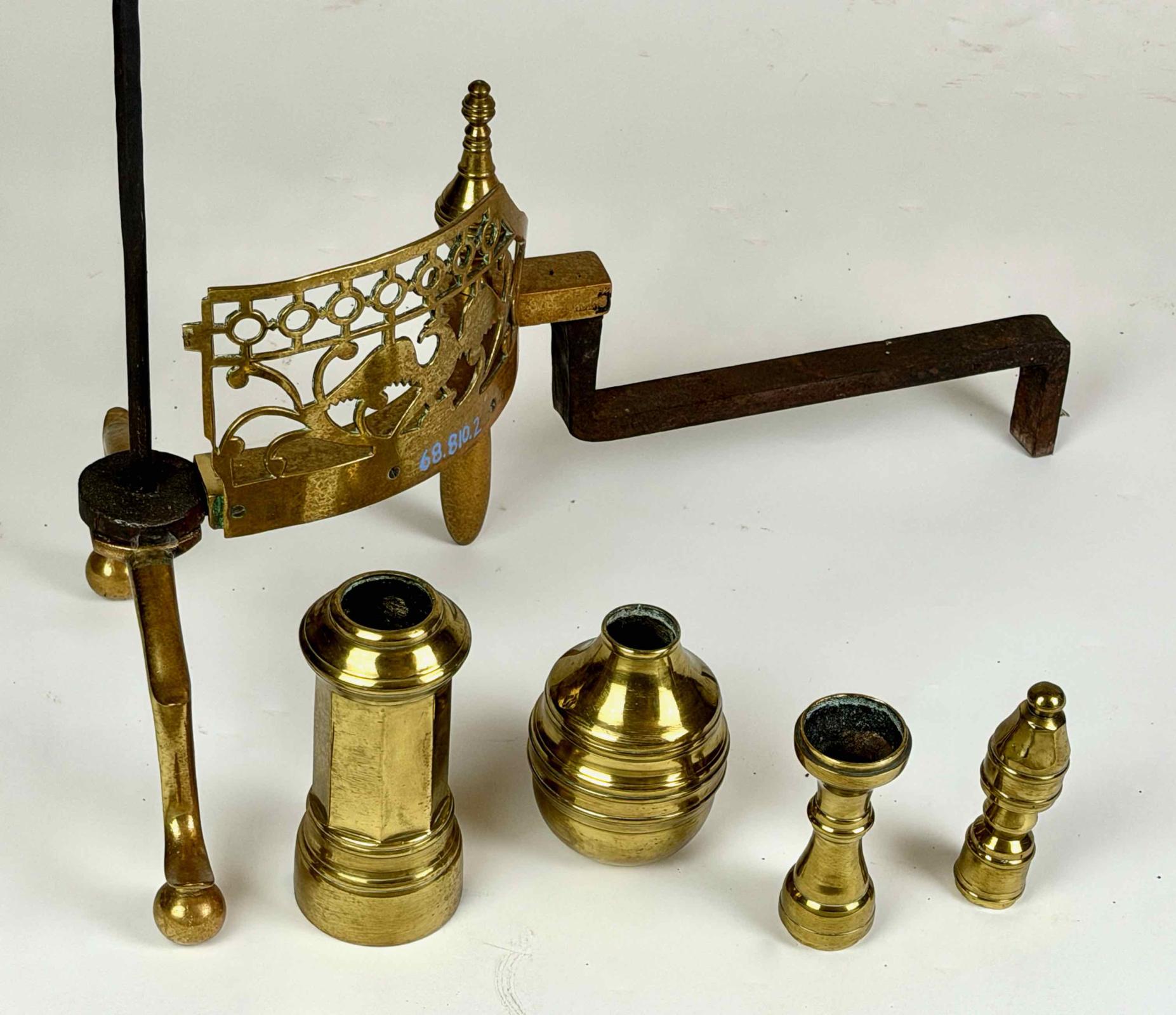
This ornate pair of andirons has complex turned shaped atop legs with spurs and standing on ball feet. Curved billet bars lead to a log stop and support a pierced fret of an eagle or phoenix. The stack of curved parts at the front of the andirons is made in four parts, none of which is cast in halves. The topmost element is octagonal, as is the bottom-most.
The andirons are similar in many respects to a pair signed by Richard Whittingham or his namesake son, both of New York City (see Donald L. Fennimore, Metalwork in Early America: Copper and Its Alloys from the Winterthur Collection (Winterthur, 1996], p. 143). For other andirons of this type, see Peter, Nancy, and Herbert Schiffer, The Brass Book (Schiffer, 1978), pp. 73-74. Significant departures from published examples that indicate a possible date of manufacture in the 20th century include the almost over-complexity of ring details, feather details along the bottoms of the wings in the fret, and the bulbous foot below the log stop.