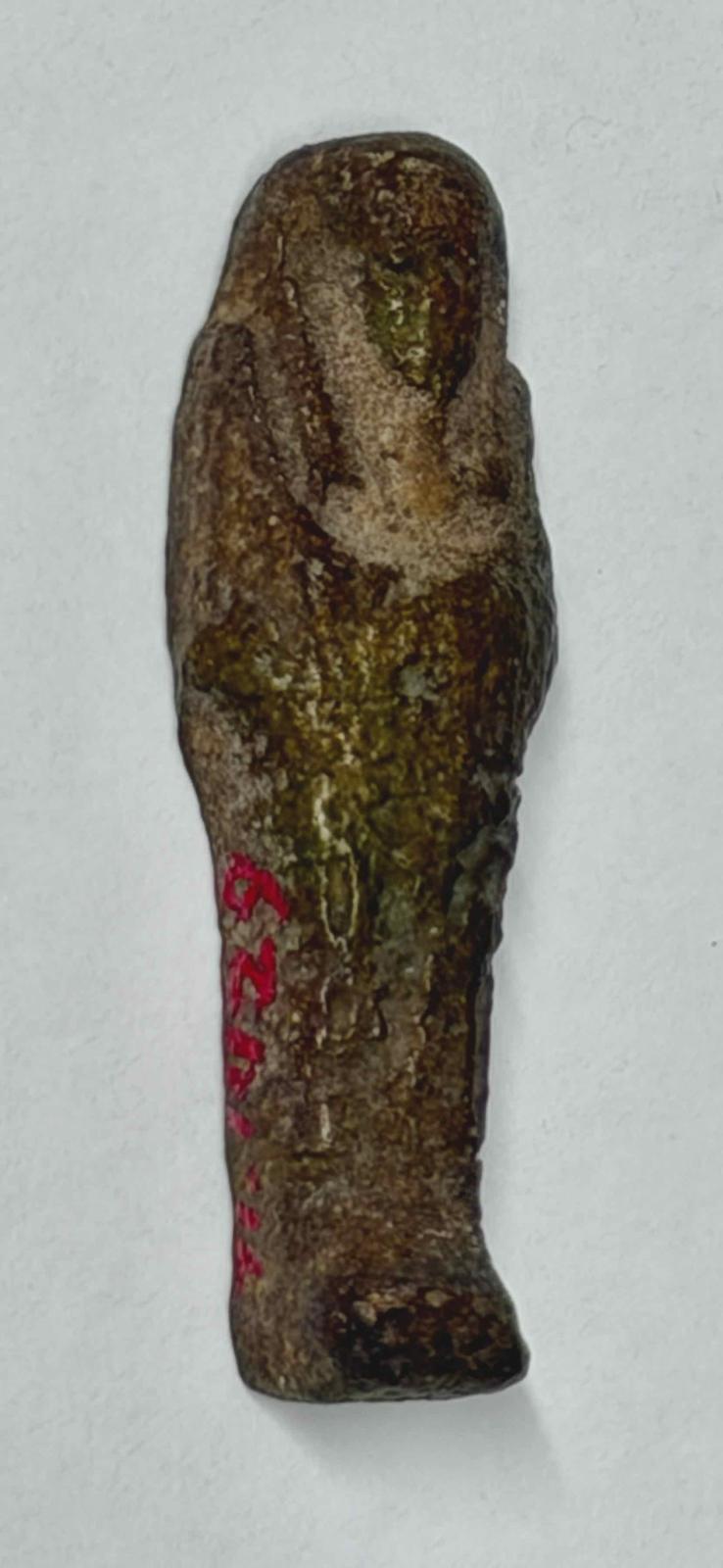
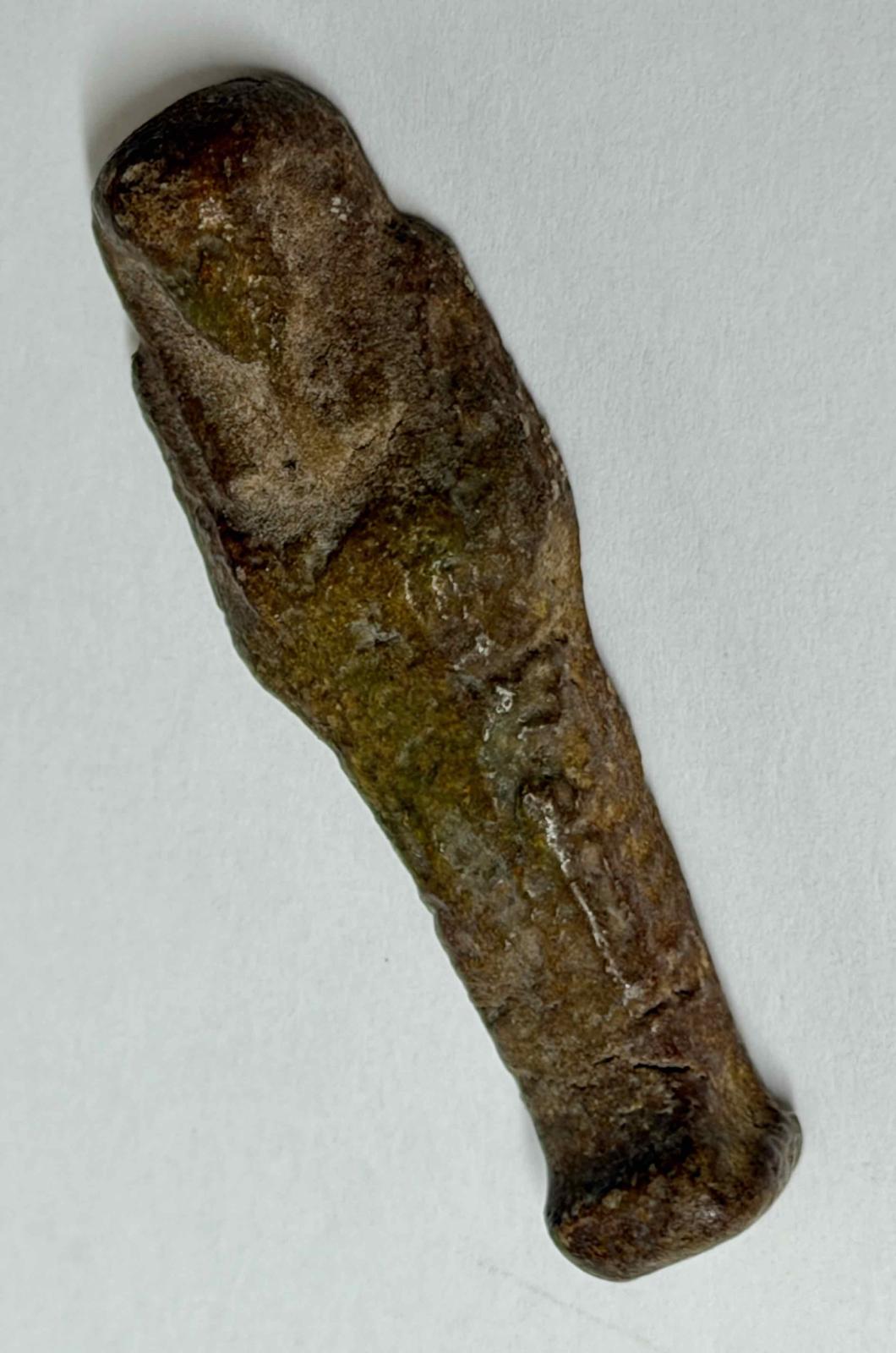
Ushbati (mini mummy)
Egypt
2000-1200 BCE or c. 1856
Measurements
2-1/8 in x 3/4 in x 3/8 in
Materials
Probably an earthenware
Credit Line
Historic Odessa Foundation, The David Wilson Mansion, Inc.
Accession Number
1971.1429
Inscription
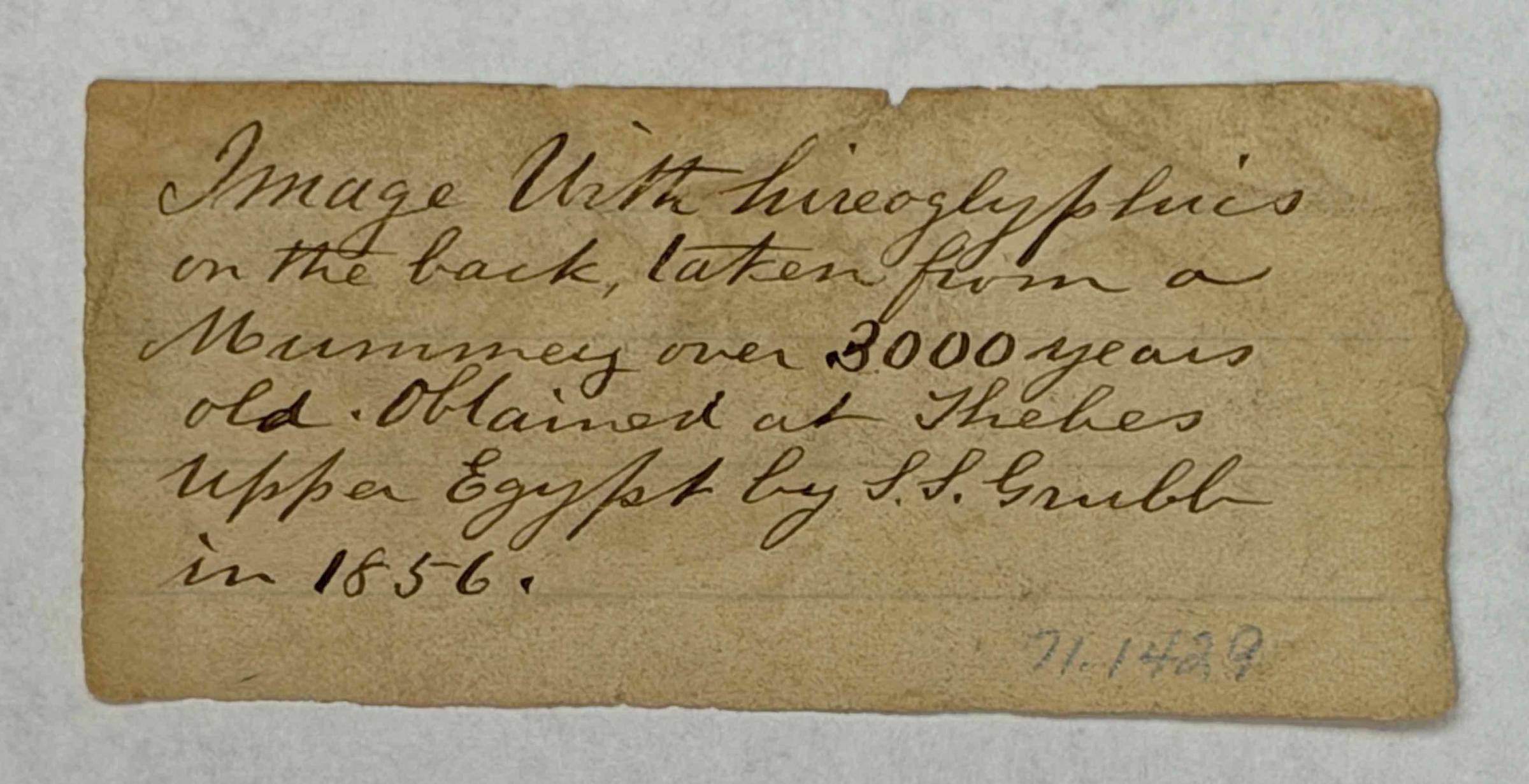
“Image With hieroglyphics / on the back, taken from a / Mummey [sic] over 3000 years / old. Obtained at Thebes / Upper Egypt by S. S Grubb / in 1856.” is written in ink on an accompanying piece of paper.
Provenance
Ex coll. Mrs. E. Tatnall (Mary Corbit) Warner
Comments
This small funeral figurine of an ancient Egyptian mummy may date between 2000 and 1200 BCE, but it may also be a late 19th century reproduction made for the tourist trade to Egypt. The originals were placed in great numbers (i.e., hundreds) in tombs among other, more substantial grave goods. These small ushbatis represented servants or underlings, available for physical labor in the afterlife.
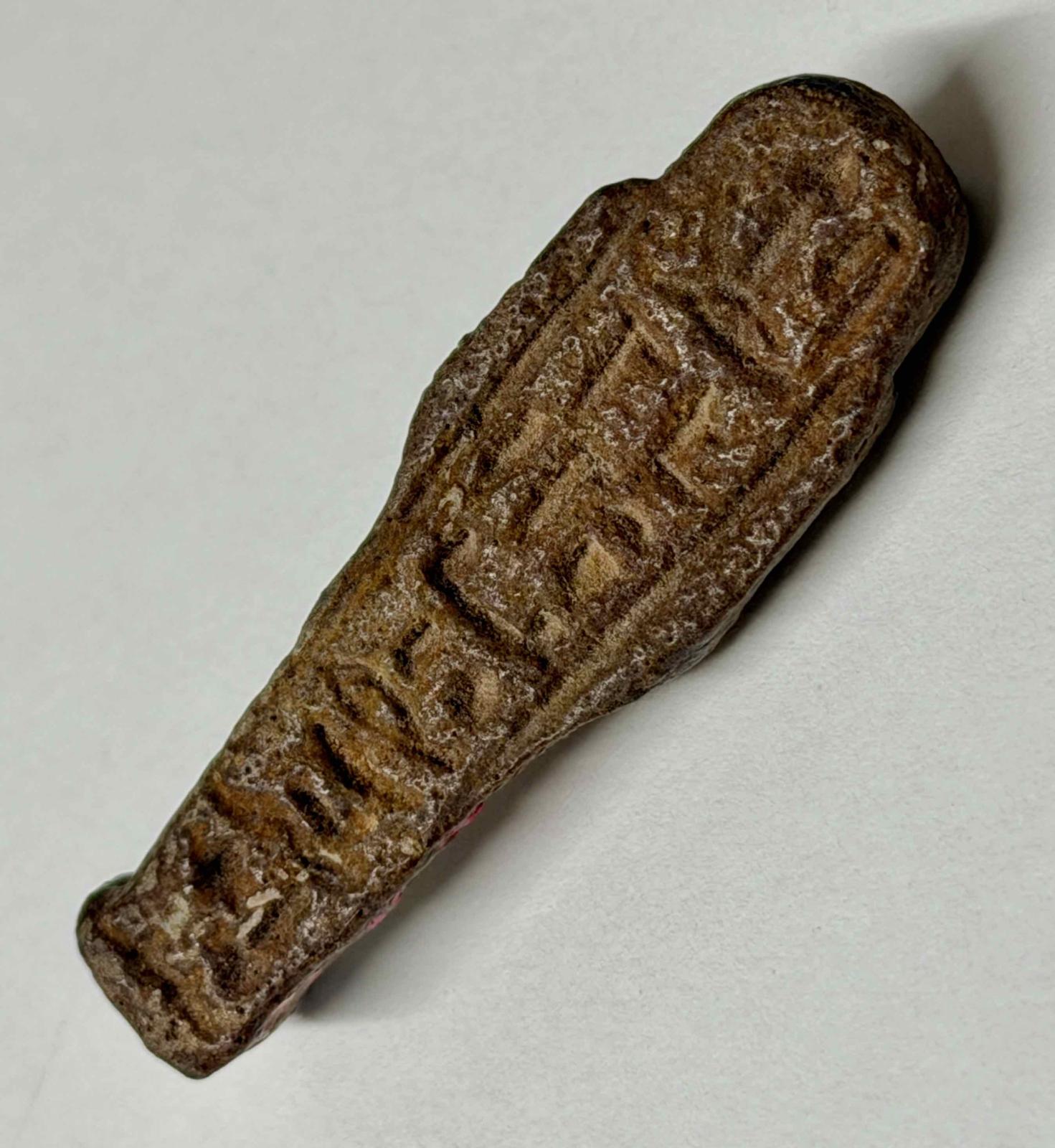
Although ushbatis were small and numerous, therefore likely available for purchase by late 19th century tourists and other Westerners, this example lacks the shape and detail of many surviving examples. Moreover, ushbatis were commonly painted with enamels on a variety of materials—stone and wood, and later fired earthenware—and display a form and detail not evident here. The arms in particular are ill-formed. The mummy has hieroglyphics cast into the back.
A handwritten note accompanying the figurine reads, “Image With hieroglyphics / on the back, taken from a / Mummey [sic] over 3000 years / old. Obtained at Thebes / Upper Egypt by S. S Grubb / in 1856.” Executed in ink on faint, blue-lined paper, this note is much like many written by Mary Corbit Warner, but the handwriting appears to be different. S. S. Grubb is not identified, although the Grubb family was among the earliest English settlers in Delaware.