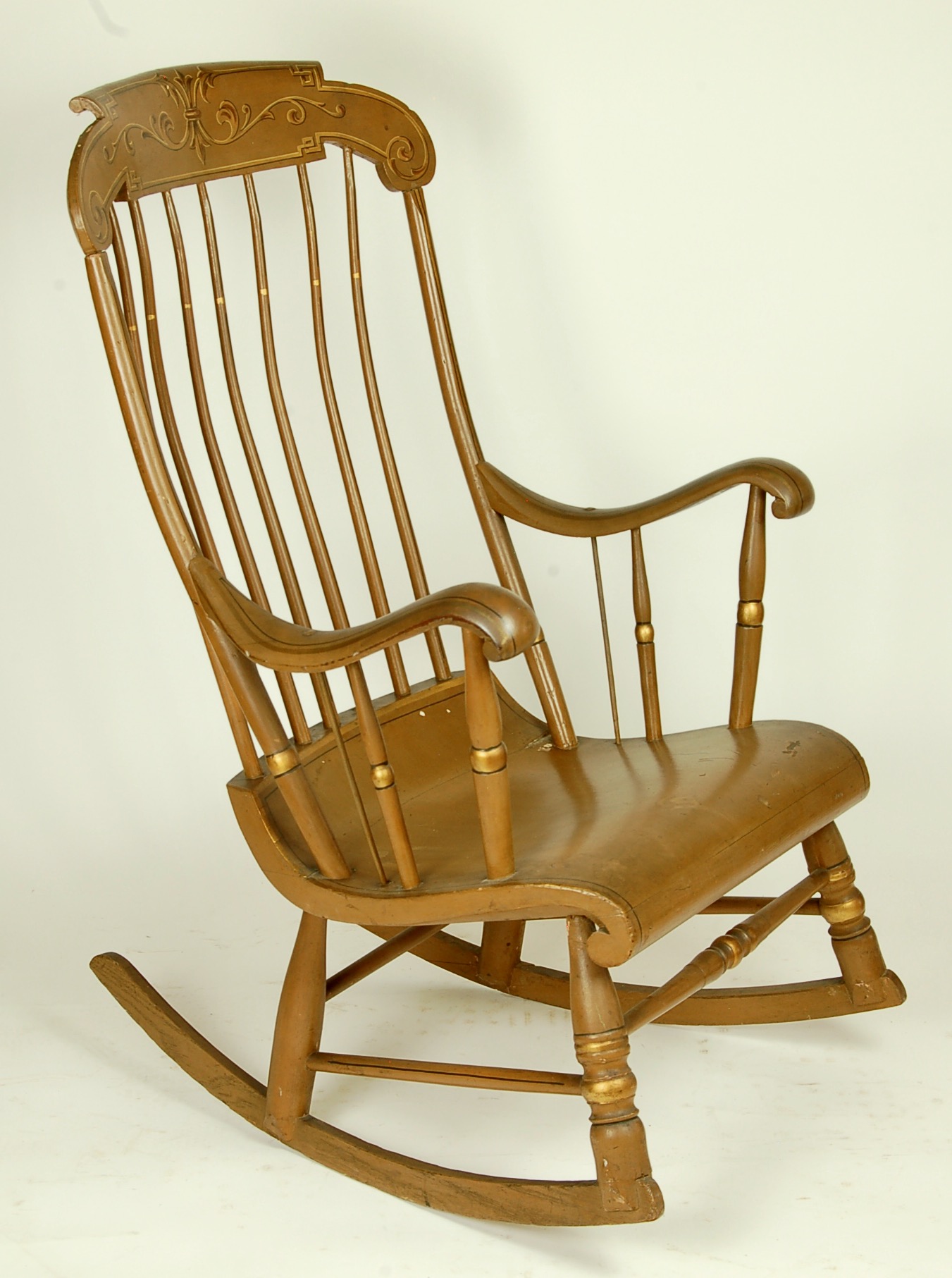
Crown-top Windsor rocking armchair (or "Boston rocker")
Gardner, Massachusetts
1835-1860
Maker
Samuel S. Howe (1808-1889)
Measurements
40-1/2in x 24-5/8 in x 30 in
Materials
Basswood seat, ash rockers, maple legs, mahogany arms, and other unidentified woods
Credit Line
Historic Odessa Foundation, The David Wilson Mansion, Inc.
Accession Number
1971.1463
Inscription
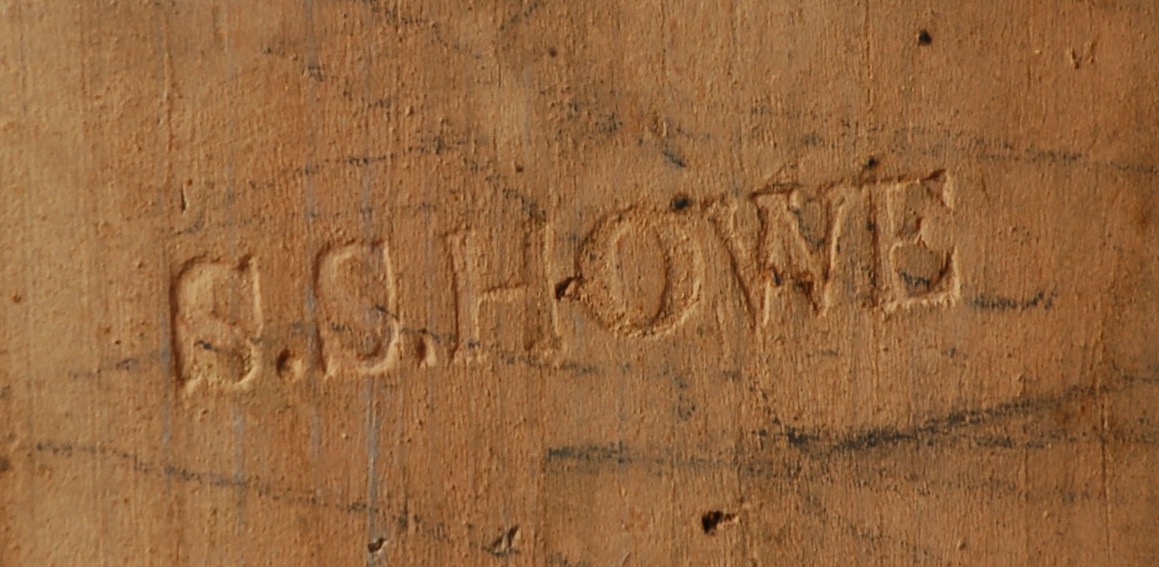
“S. S. HOWE” is stamped into the underside of the seat. ‘DEBORAH HUNT JEFFERIS 1780” is engraved into a brass plaque mounted to the outside center back of the seat.
Condition Notes
The paint and gilding are not original. The left arm split near the rear post and has been repaired with an iron strap applied underneath.
Provenance
This crown-top Boston rocker was part of the large collection of Mrs. E. Tatnall (Mary Corbit) Warner. She attached the brass plaque suggesting ownership by Deborah Hunt Jefferis (c. 1762-1842). Warner’s dates and name associations do not appear to have much, if any, basis in fact in this instance. See Philip D. Zimmerman, A Storied Past: Collections of Historic Odessa (2023), p. 47, for further information about her labeling..
Comments
This rocking chair has a shaped crest called a crown-top in the period. It scrolls backward in the center section, and the wings are bent forward. Period terminology aside, the rocker is of a form broadly recognized as a “Boston” rocker or rocking chair. Newspaper advertisements affirm that such chairs were exported and sold in East Coast urban centers--including Baltimore--from the 1830s onward. The seats of Boston rockers curved upward in the back, providing the sitter with support and comfort. The downward coil of the seat plane in the front was stylistic. Both upward and downward curves were made with additional pieces of wood glued to the seat board. The rest of the chair derived its design and functionality from longstanding Windsor chairmaking traditions.
The paint and gilded striping on this chair were applied later. Paint covers the mahogany arms that were originally unpainted. It covers seams and wood types. The underside of the seat is painted with a salmon-colored primer.
The roll at the top of the crest shows a series of saw-cuts across the back, likely to allow the maker to bend a wood rod to shape before attaching it to the steam-bent crest with glue and metal fasteners at each end. A seam along the bottom of the center section shows lamination of a 7/8-inch strip. Each down-turned end of the crest is also carefully laminated on a diagonal. The iron rods installed near the back of each arm differ slightly from one another. That on the left side might be original.