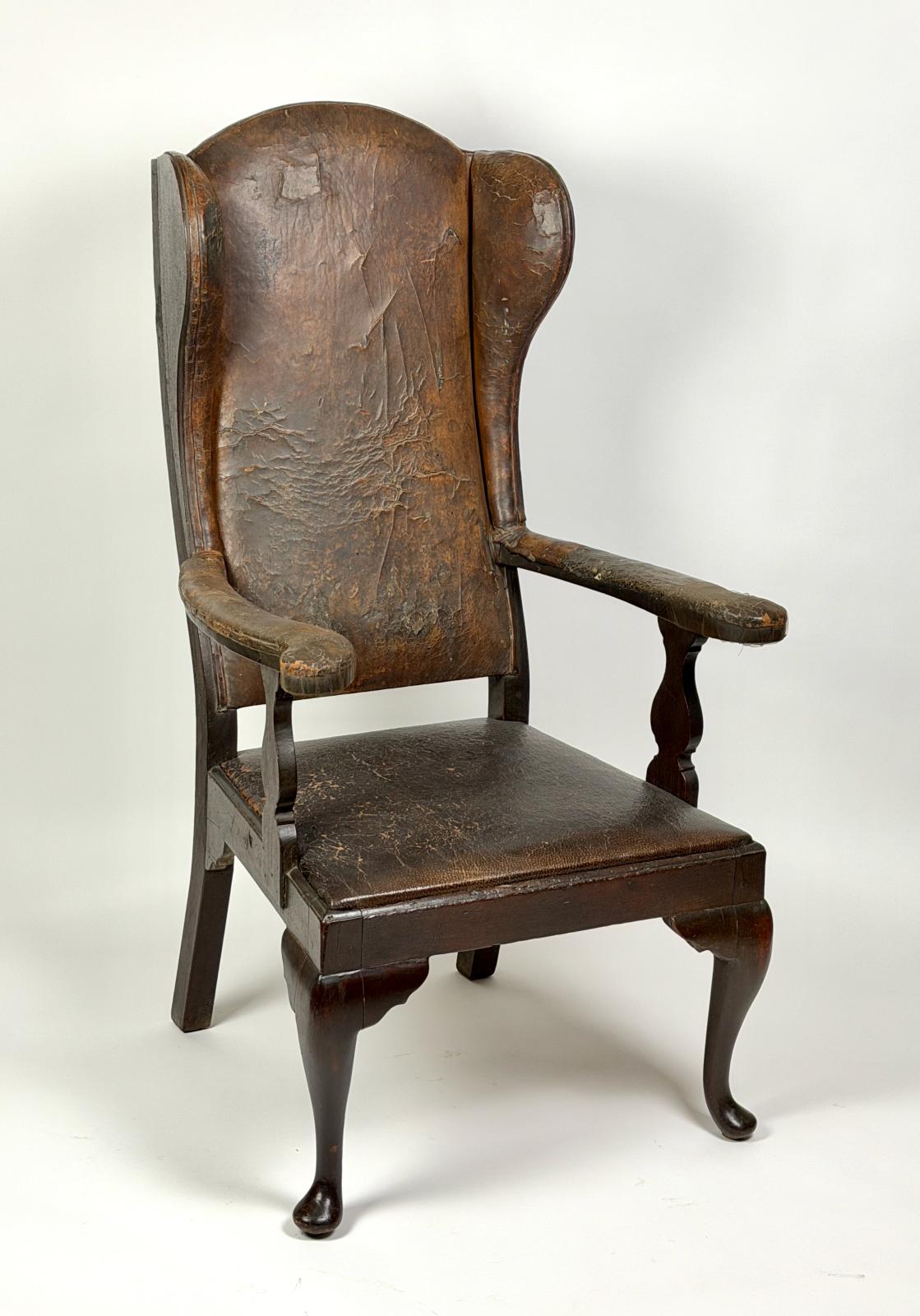
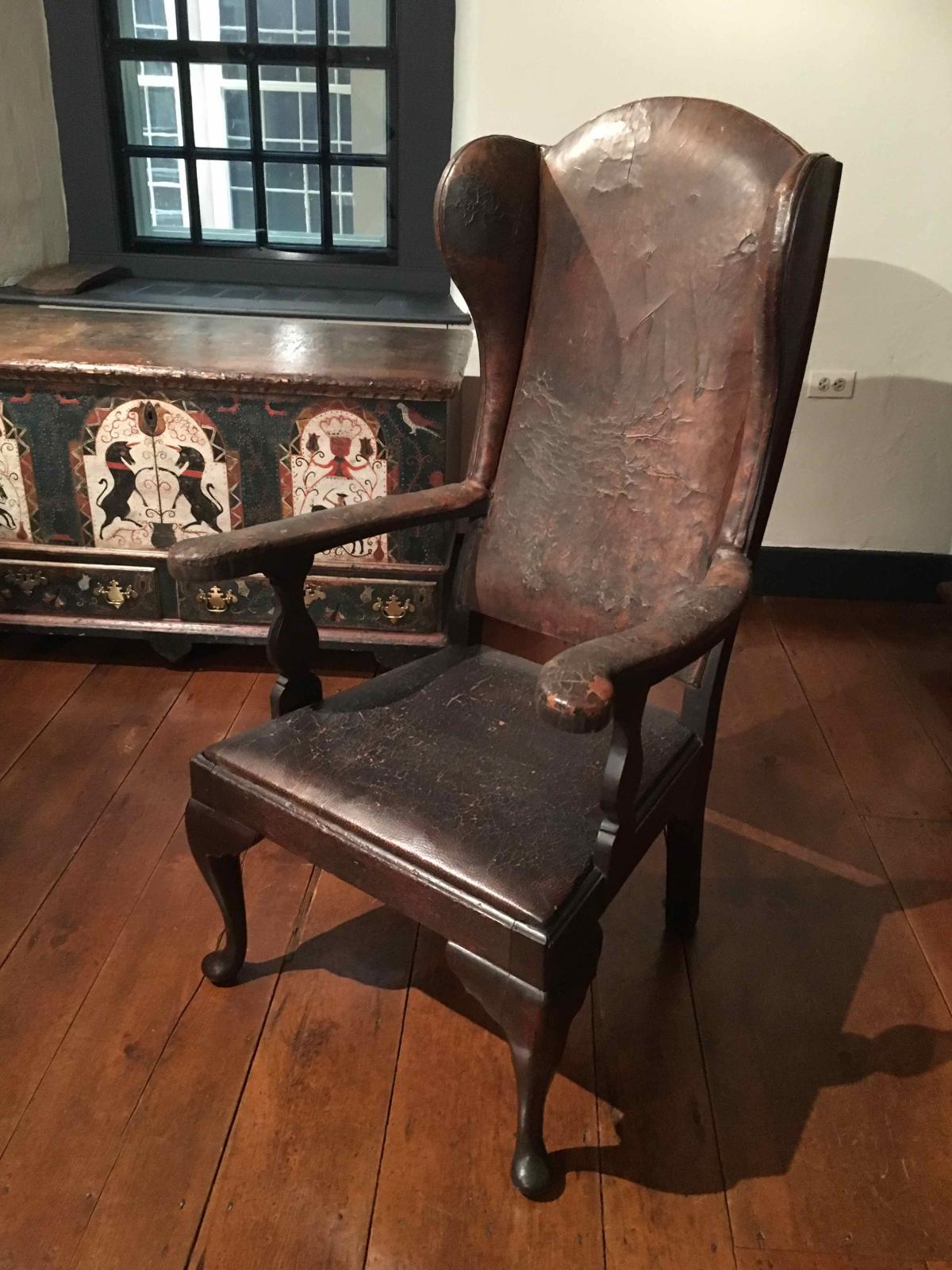
Armchair
Eastern Pennsylvania, possibly Bethlehem
1745-1775
Measurements
48 in x 25-3/8 in x 27-1/2 in
Materials
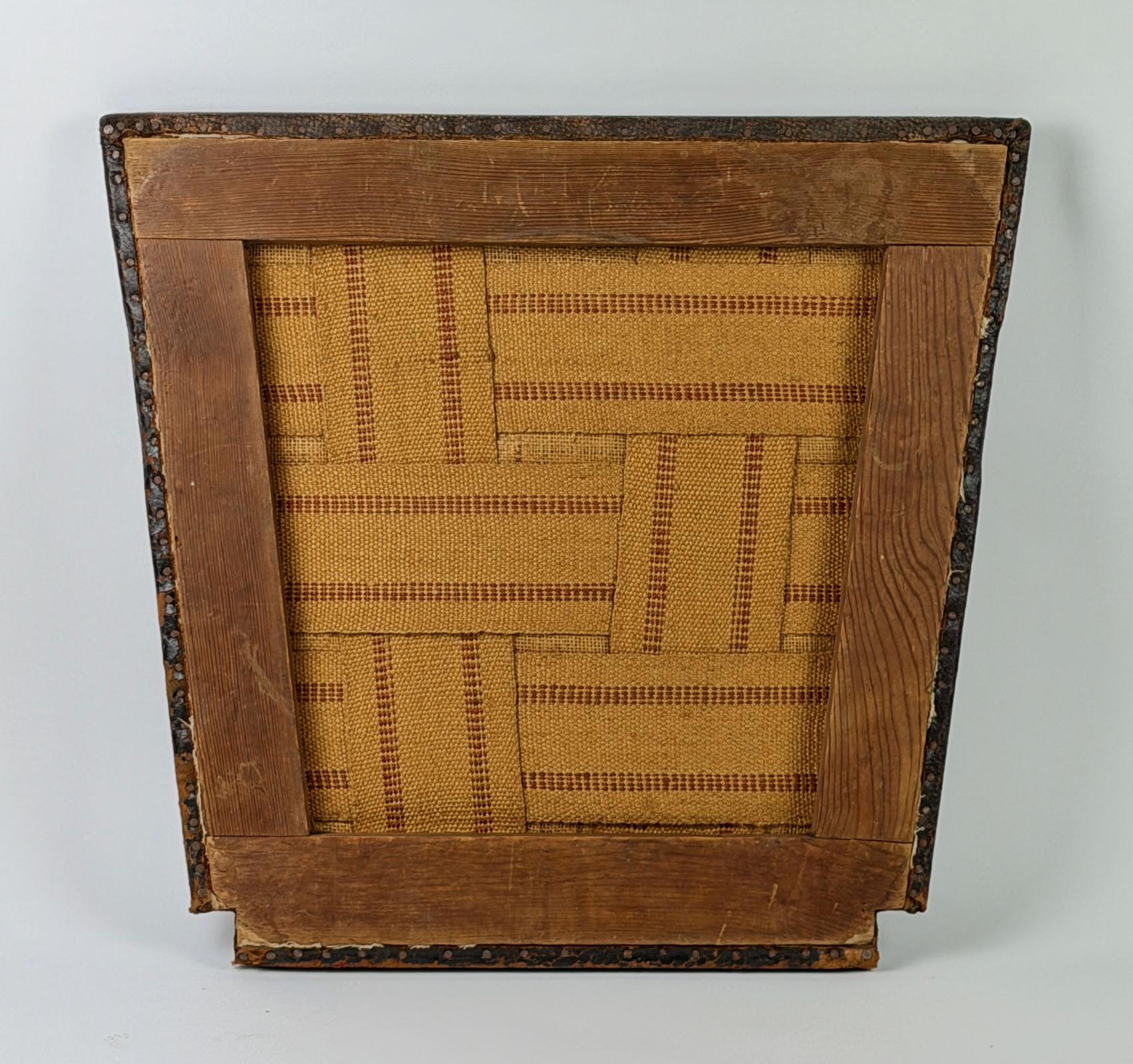
Walnut; white pine (support rails for chamber pot, corner blocks), hard pine (replacement slip seat); leather (upholstery)
Credit Line
Historic Odessa Foundation, gift of H. Rodney Sharp
Accession Number
1958.3233
Condition Notes
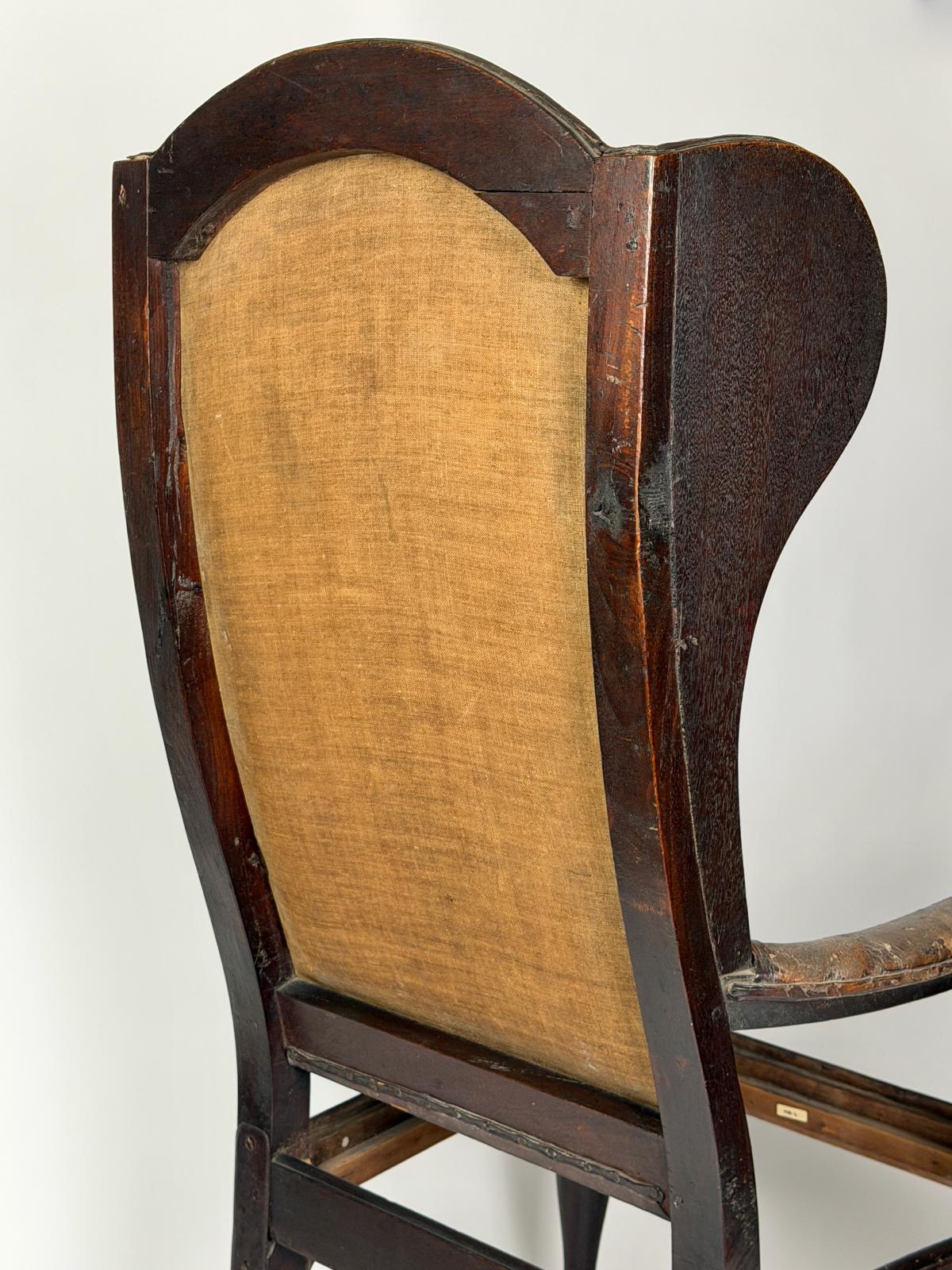
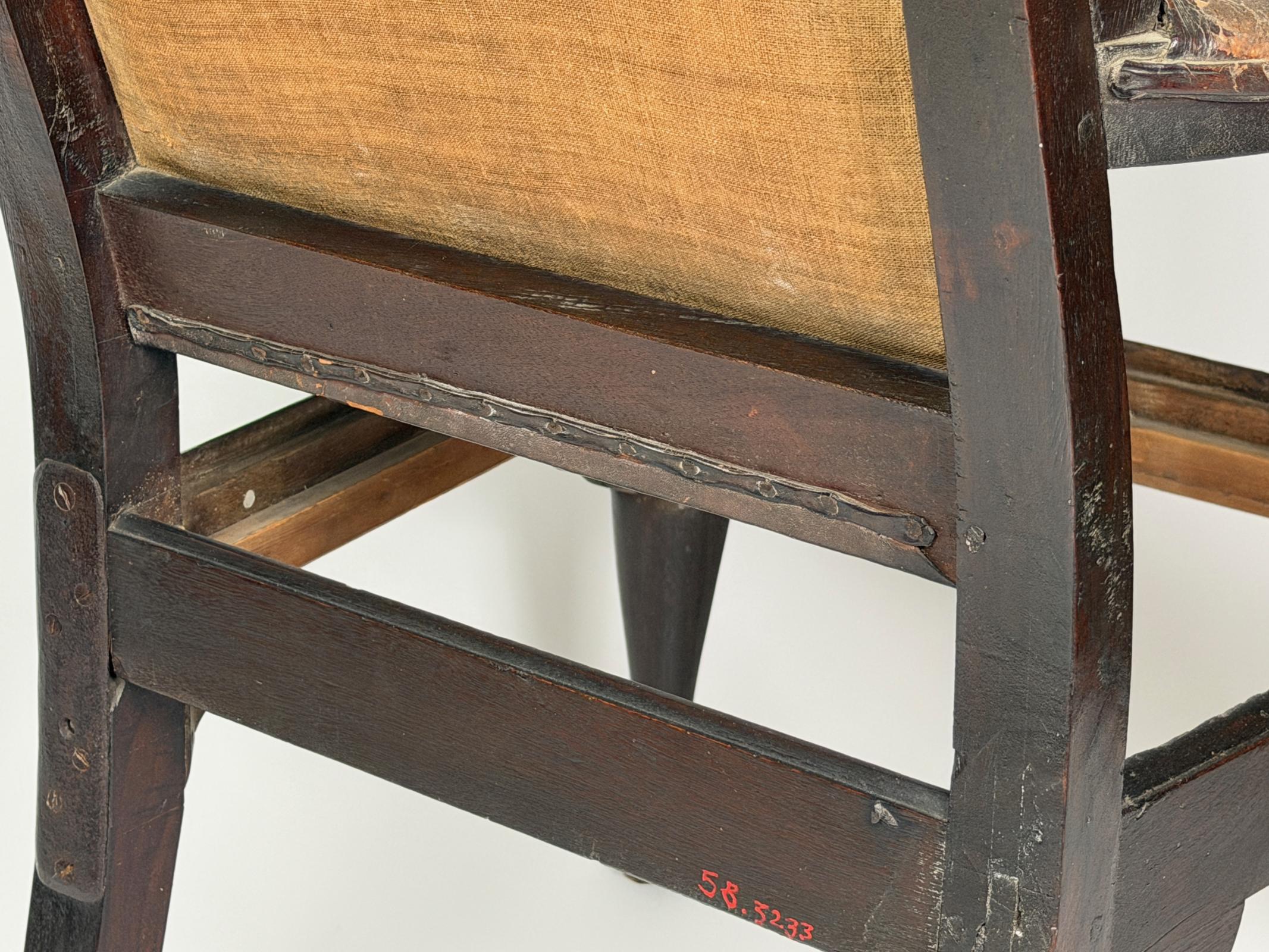
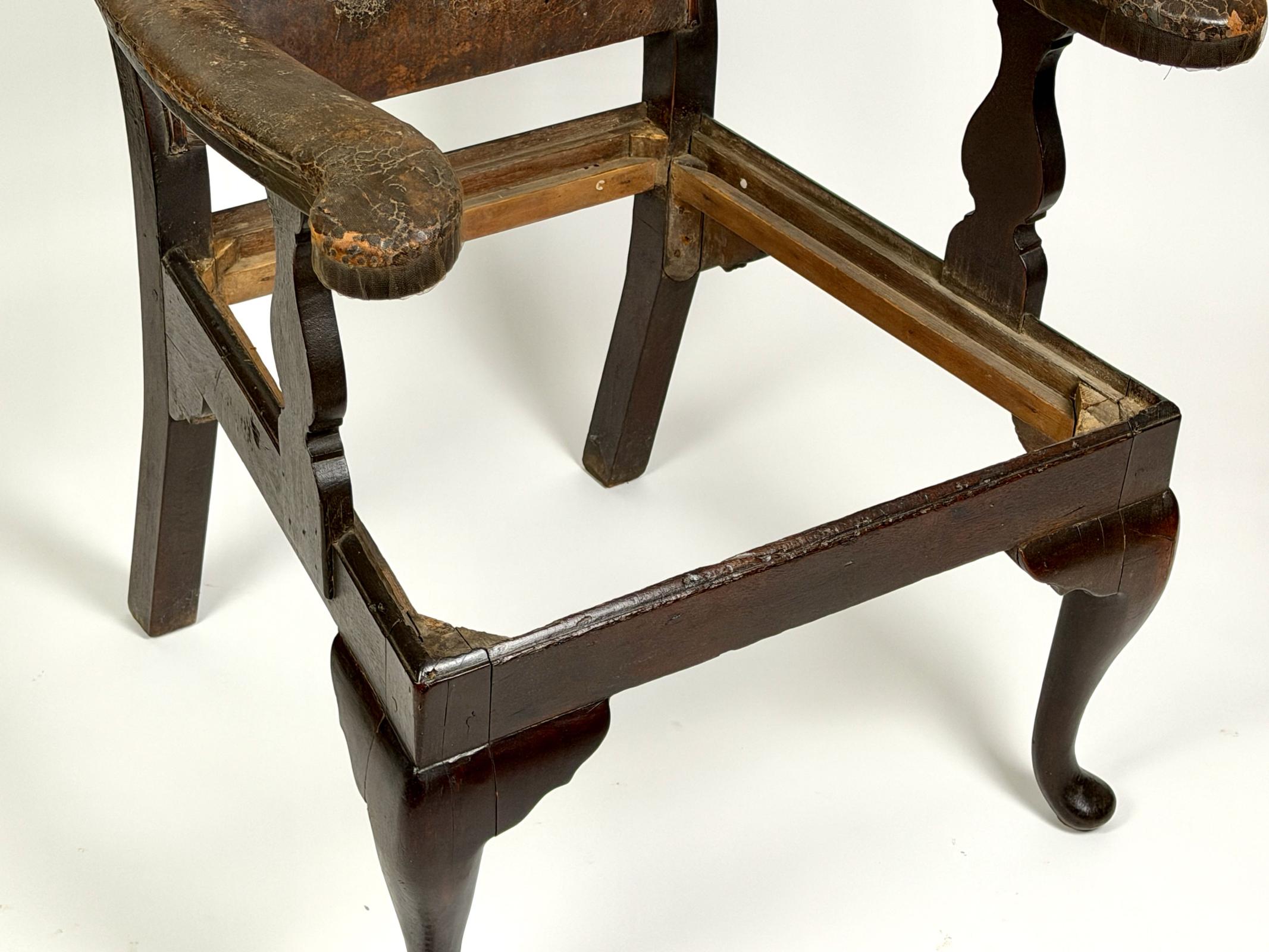
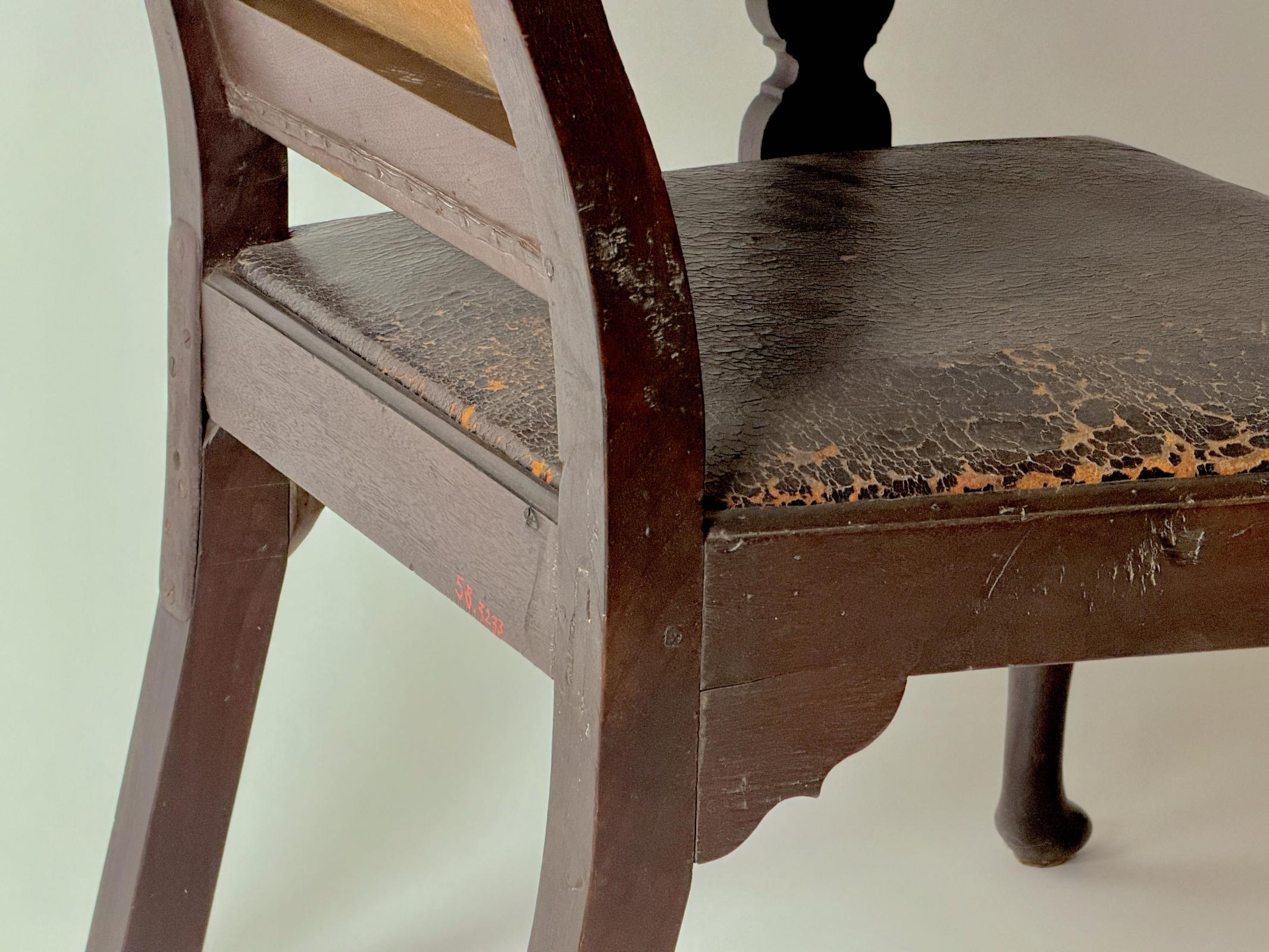
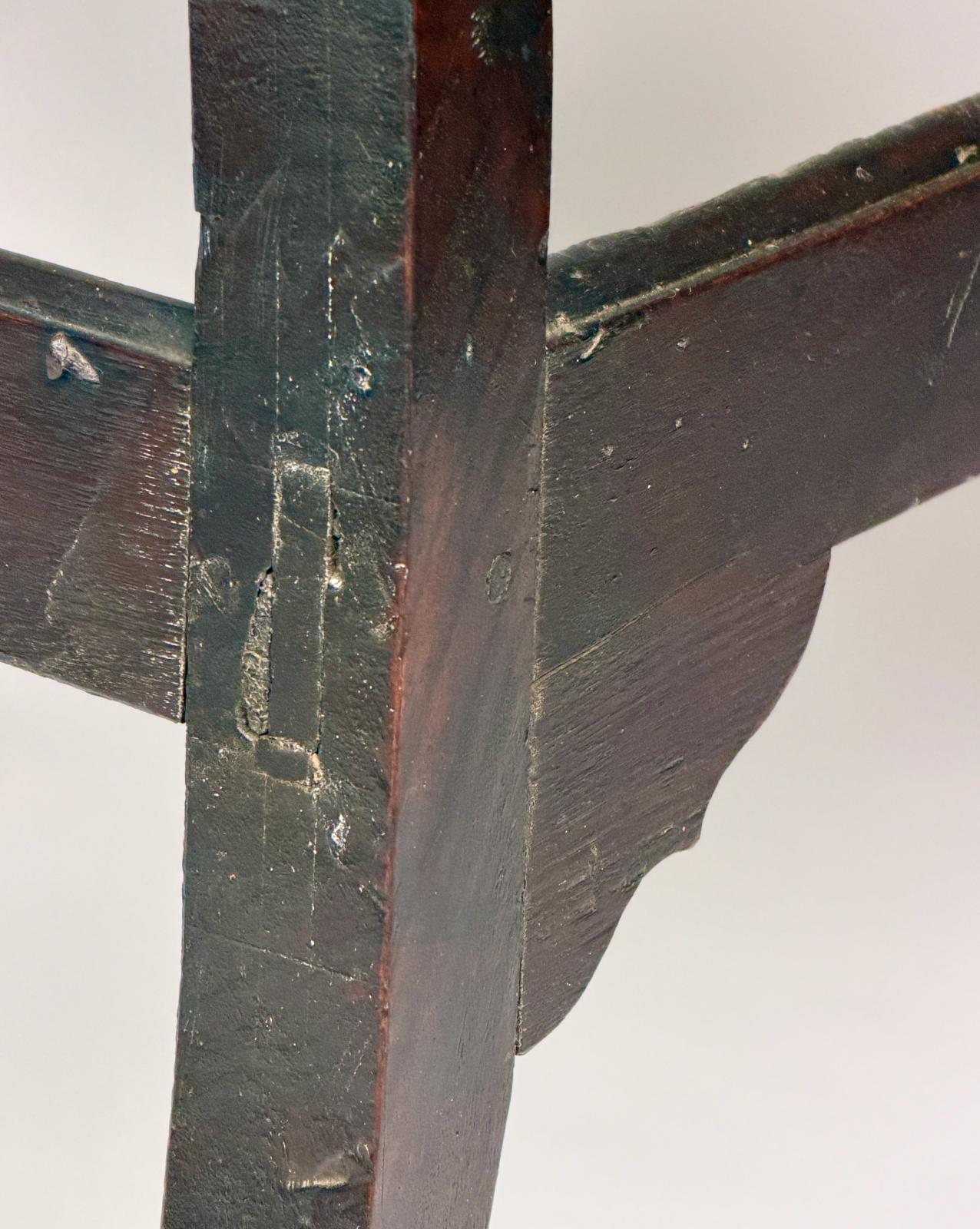
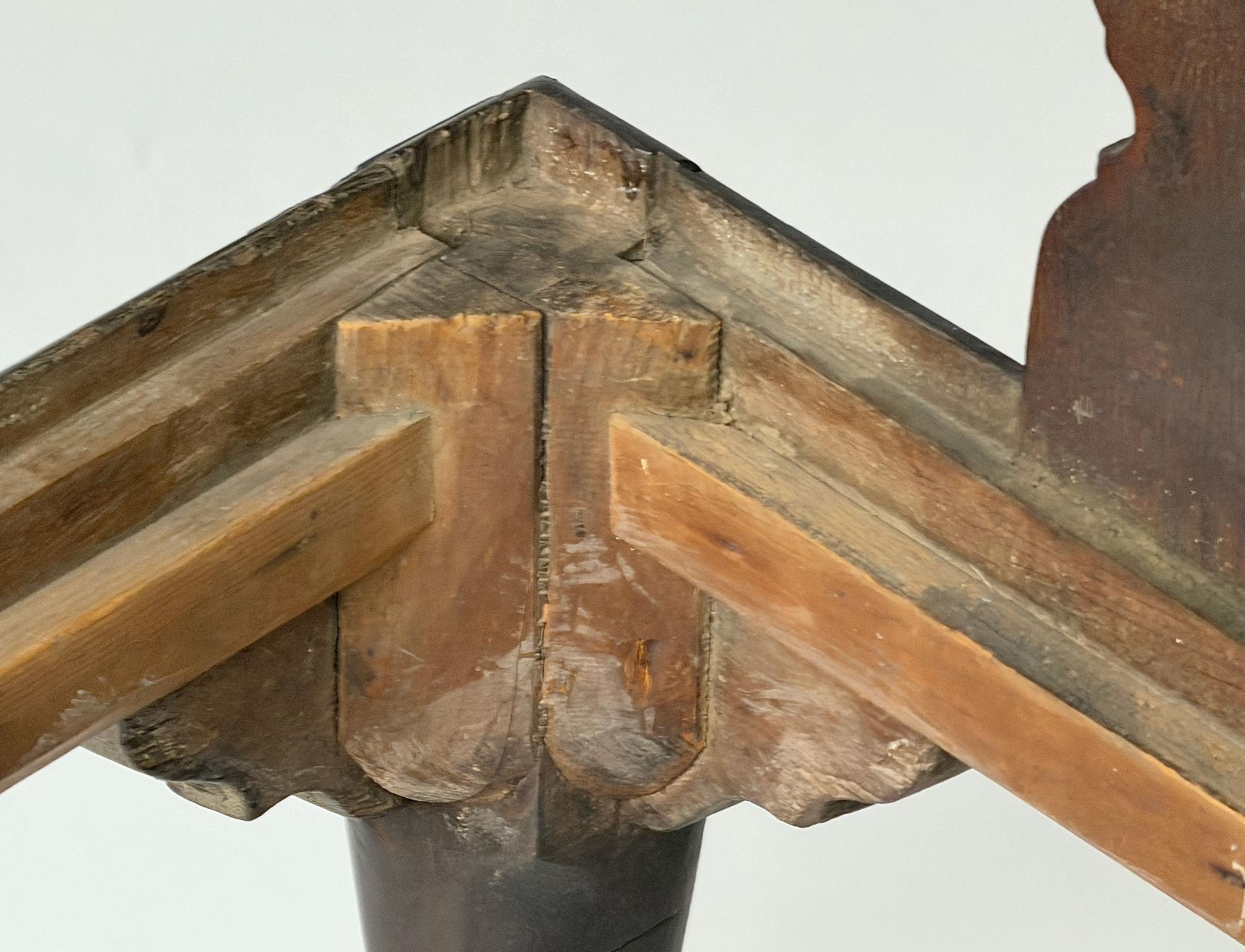
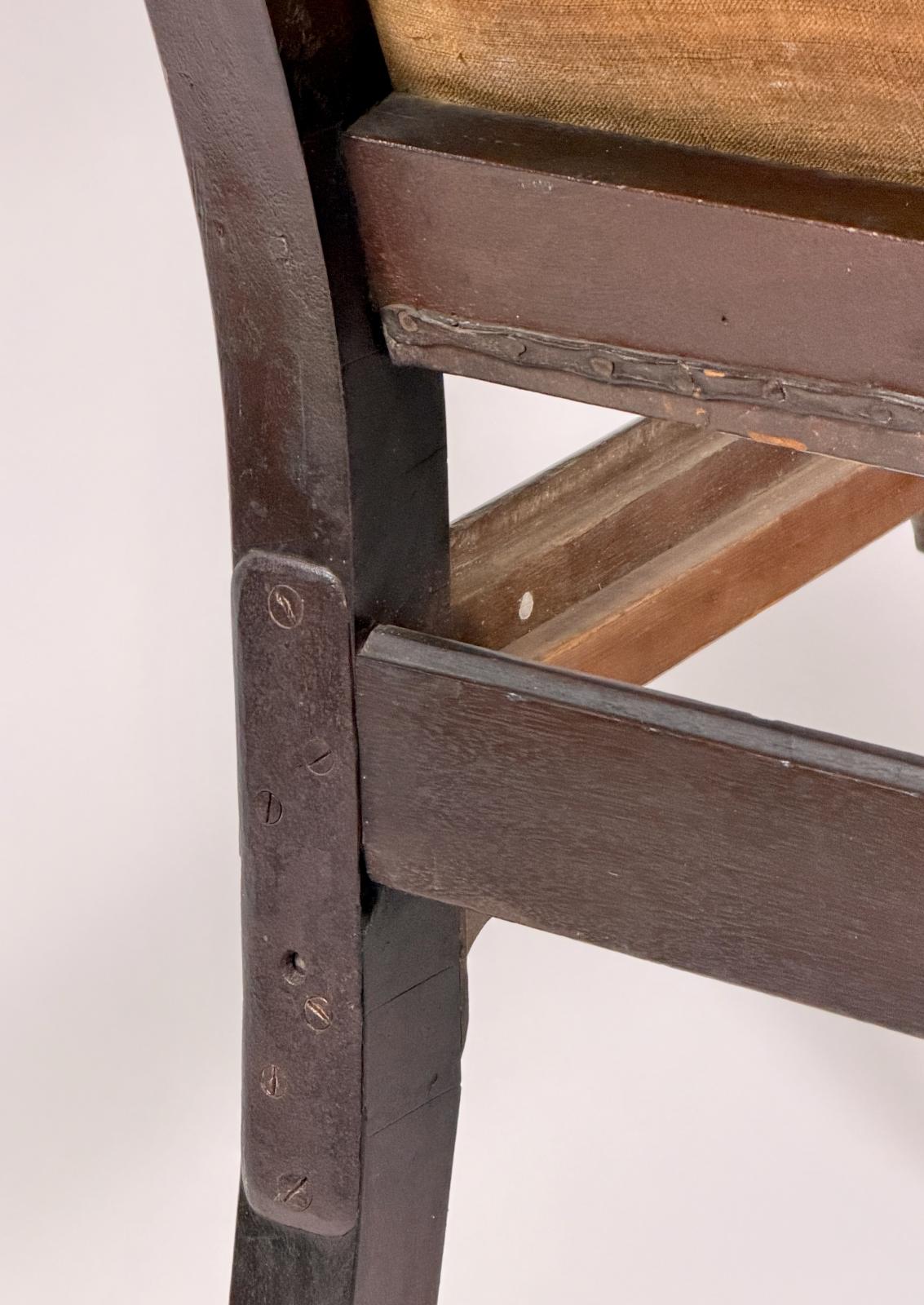
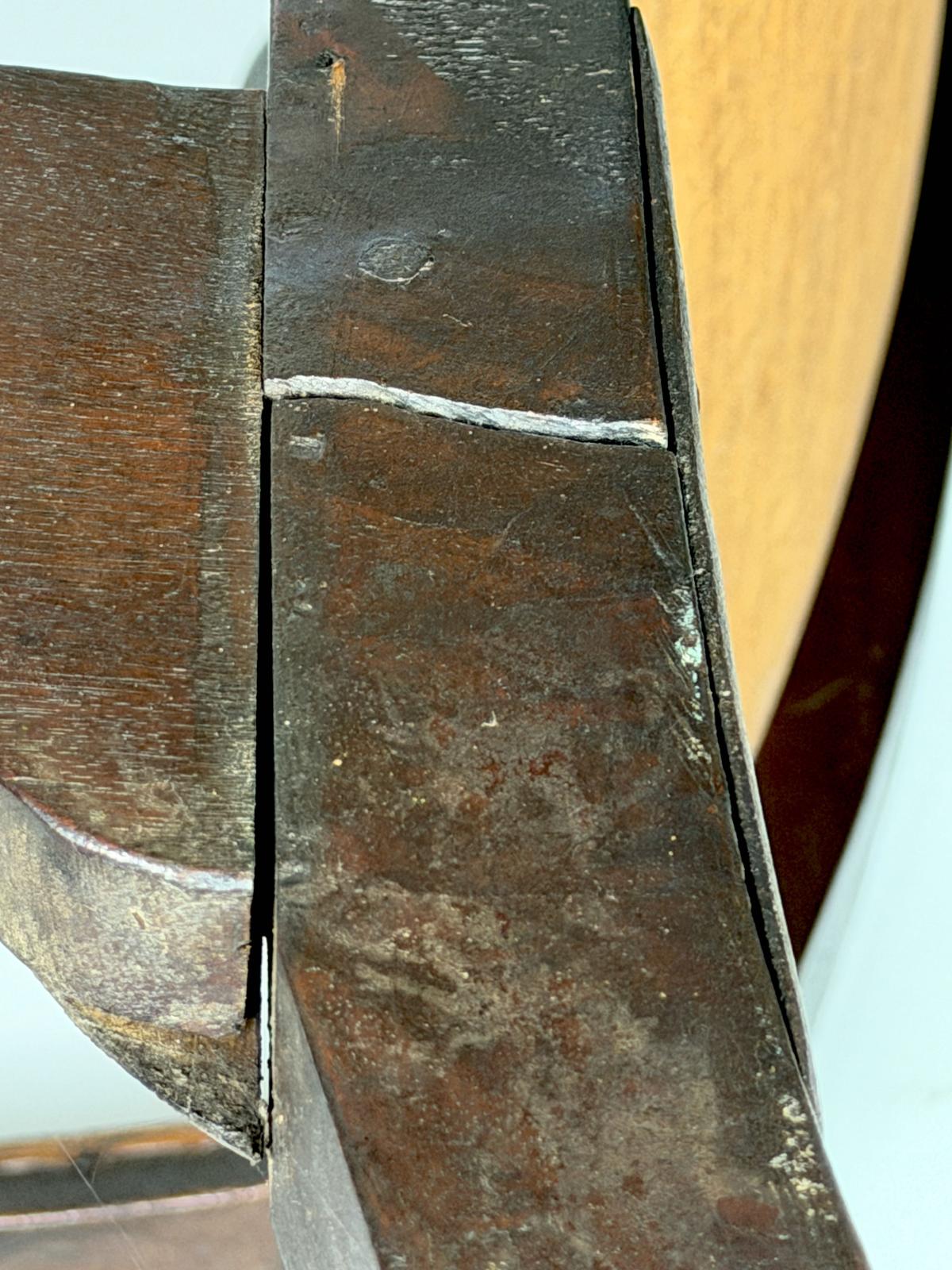
The leather-upholstered slip seat is a replacement. The inside of the seat frame was once fitted to support a chamber pot. The right rear leg has broken and is repaired and reinforced with an iron strap.
Provenance
Ex coll. H. Rodney Sharp
Comments
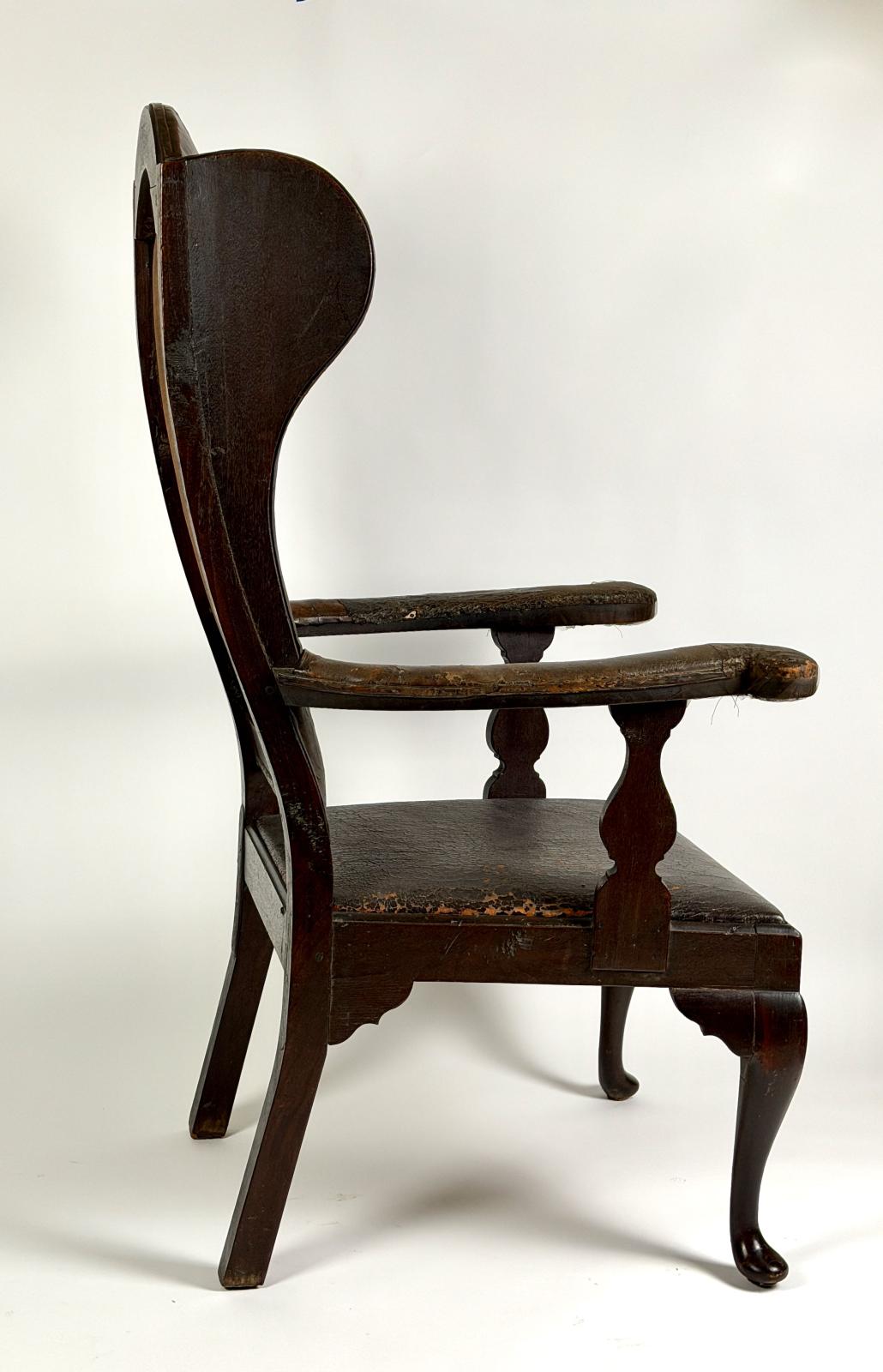
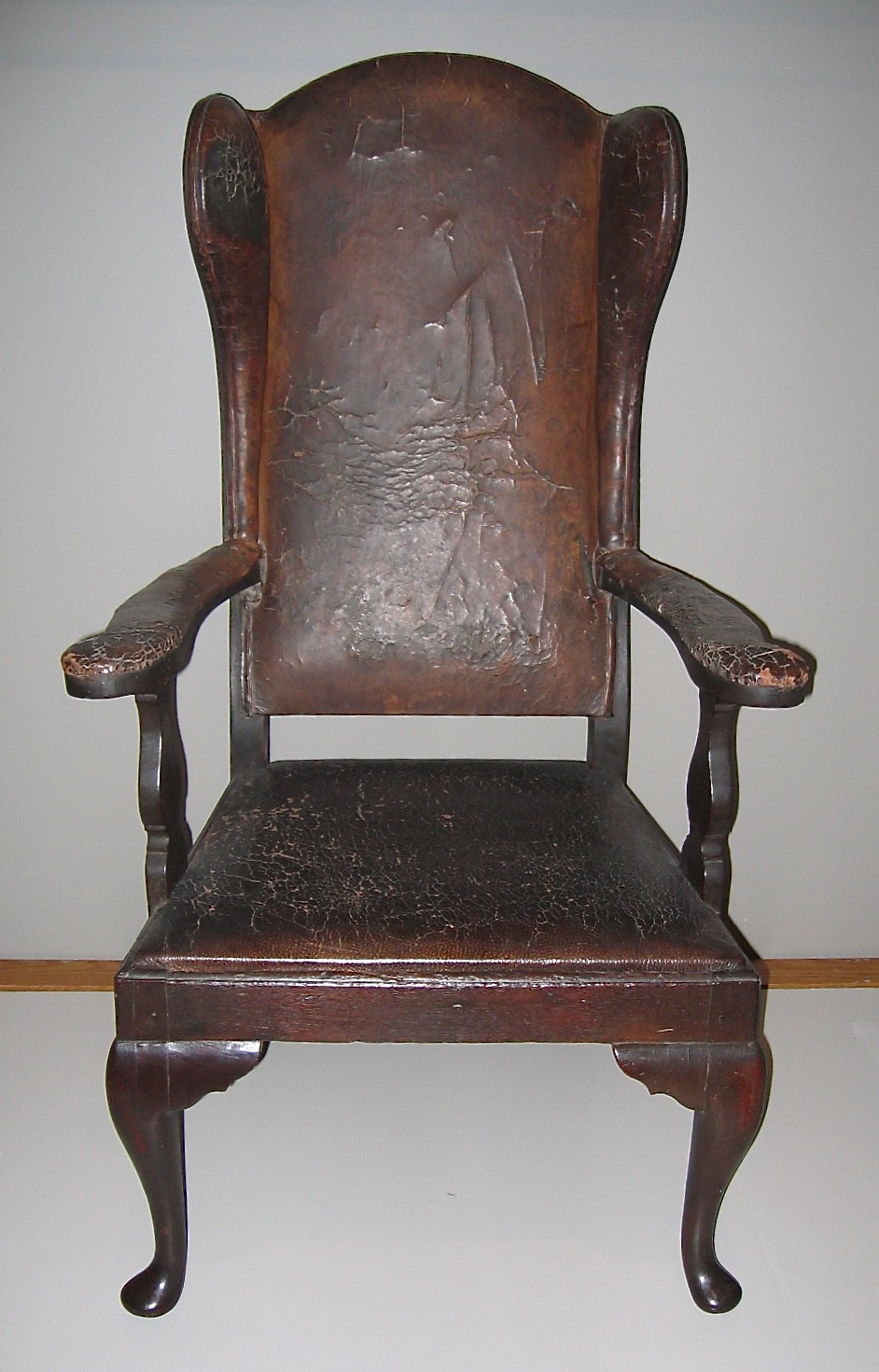
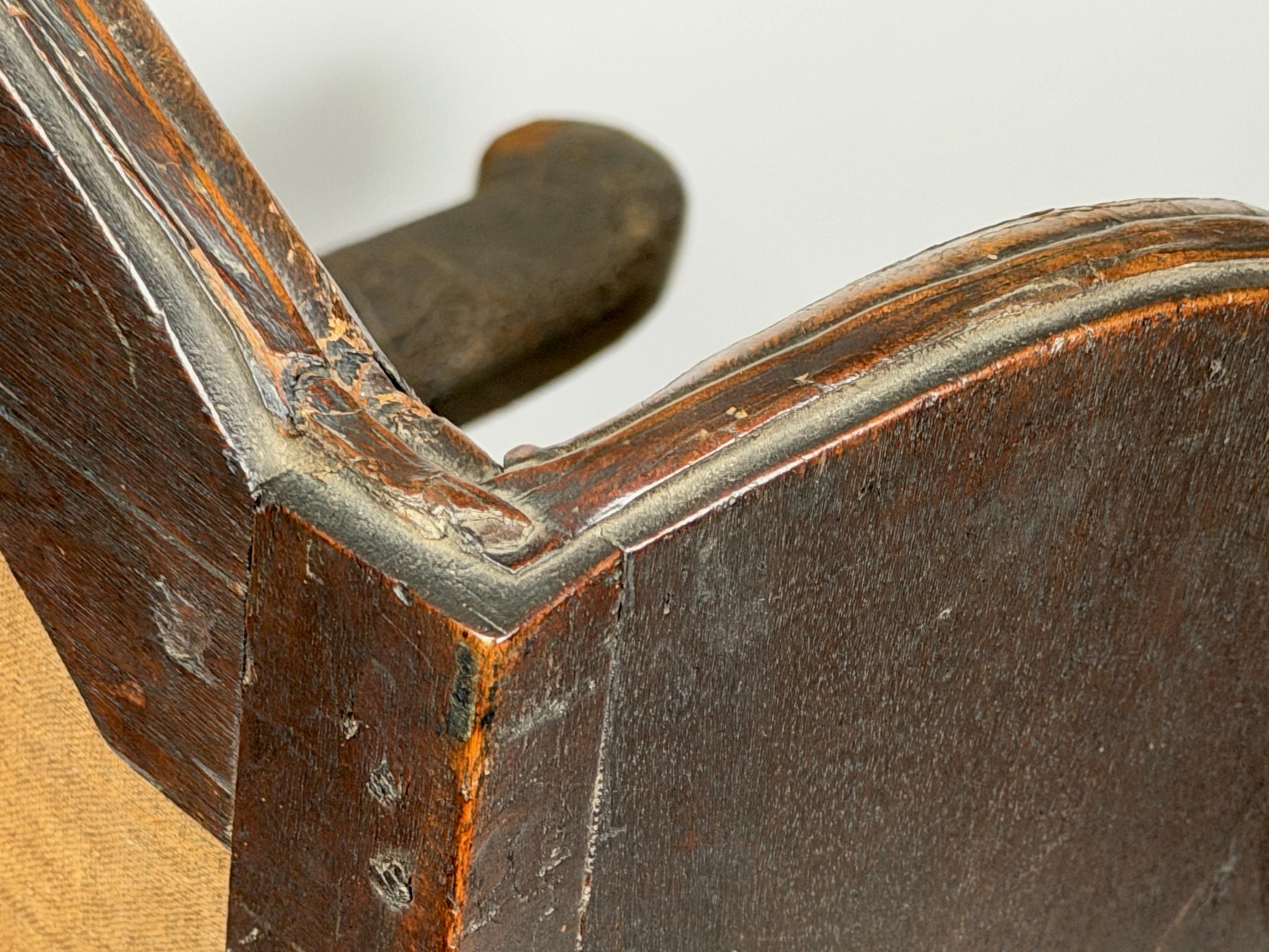
This rare and important Pennsylvania German chamber armchair has no provenance beyond ownership in the Sharp collection, but its appearance and structural details relate it to 18th century Moravian seating. Some the key details include the wings that curve into the frame as they descend (lacking the deep side panel common in English-based designs), the flat arms that curve in a horizontal plane, the baluster-shaped arm supports, and the opening across the back above the rear seat rail.
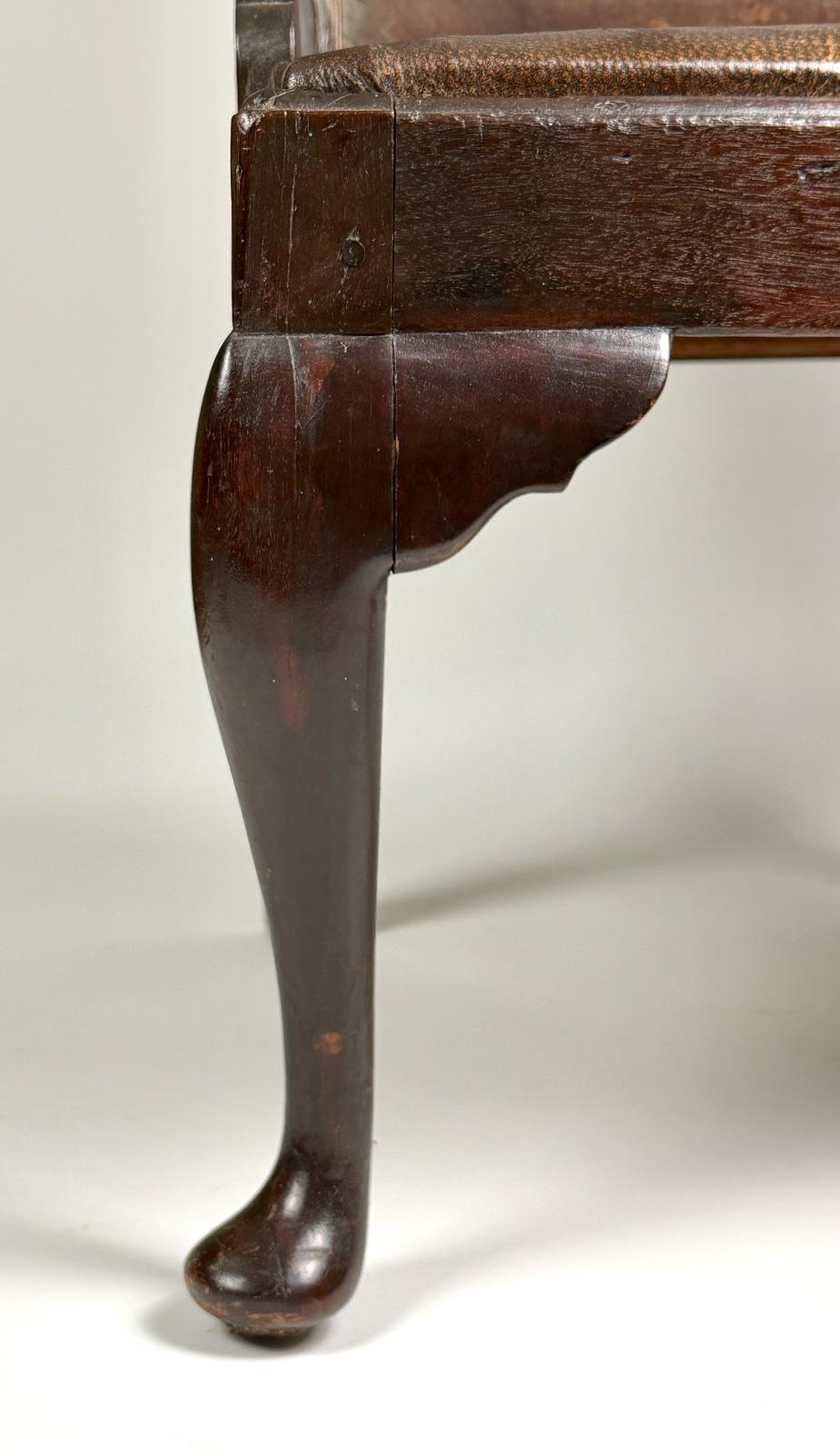
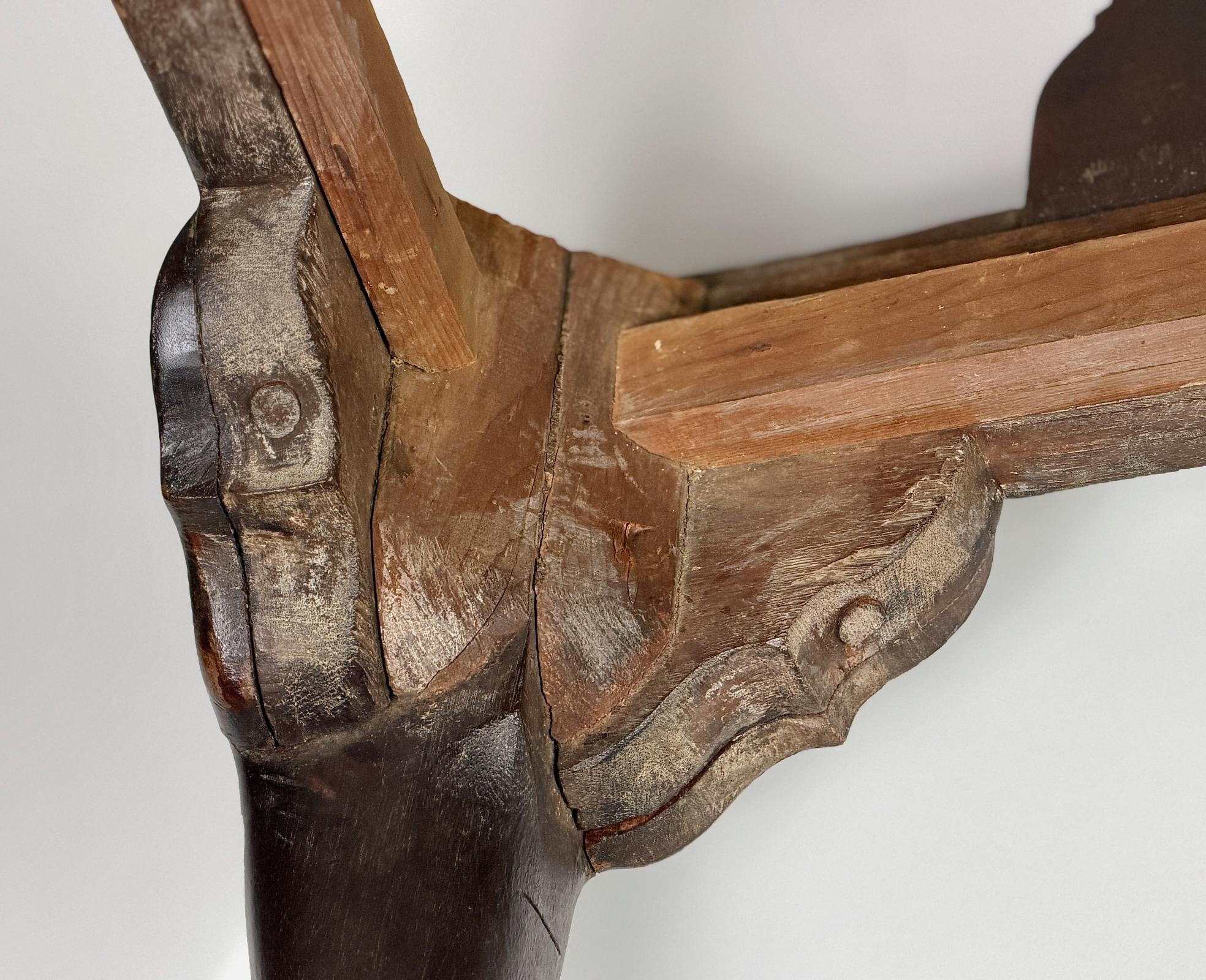
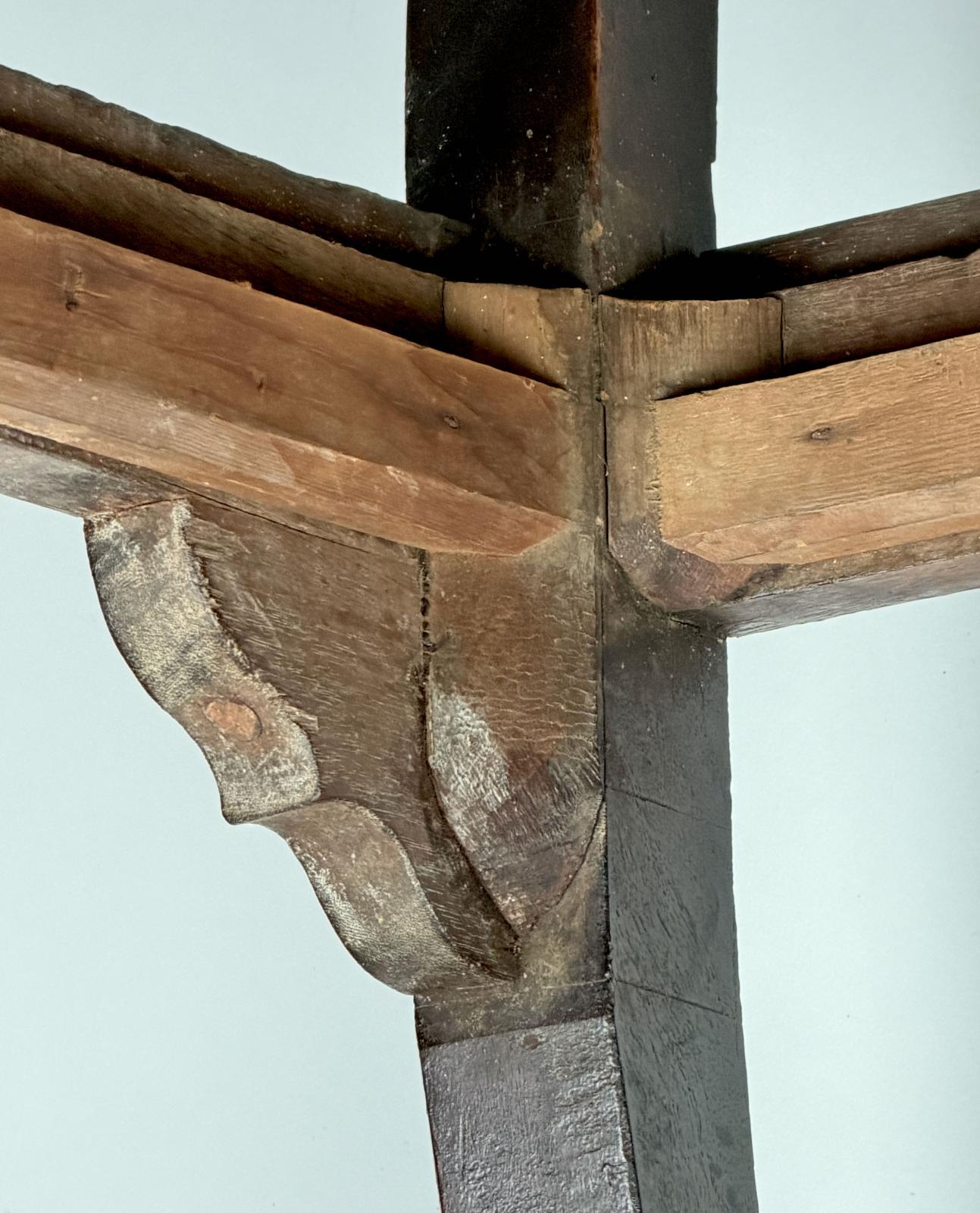
Several smaller details that are not readily evident in furniture histories include the Philadelphia-style knee brackets that are facings glued to the shaped seat rails, rather than being much thicker shaped blocks that fit underneath the seat rails. These facings have grain oriented vertically, rather than horizontally, and the seat rails are 5 inches deep. The rear rail has a thumbnail molding across the top that matches moldings on the front and side rails. The shape of the front cabriole legs also differs from that of Anglican-based designs. These legs do not project forward at the top of the knee; instead, they drop down, curve—or rather angle—backward, and then reverse the curve into the pad foot.
The leather covering the chair back and wings may be original to the chair. That on the seat looks old but is a replacement tacked onto a replacement seat frame. The seat frame covers strips of wood attached to the insides of the seat rails that in turn supported a wood deck to hold a chamber pot.
The armchair is quite vertical in its proportions. Another early indicator of its manufacture lies in the arched crest rail. Later examples have flatter crests, often embellished by carving.